What Is Vertical Farming? How It Works and Where It Is Used
What is vertical farming? Crops grown indoors on stacked shelves under LED light, usually without soil. How the system works, where it is used and whether it is healthy.
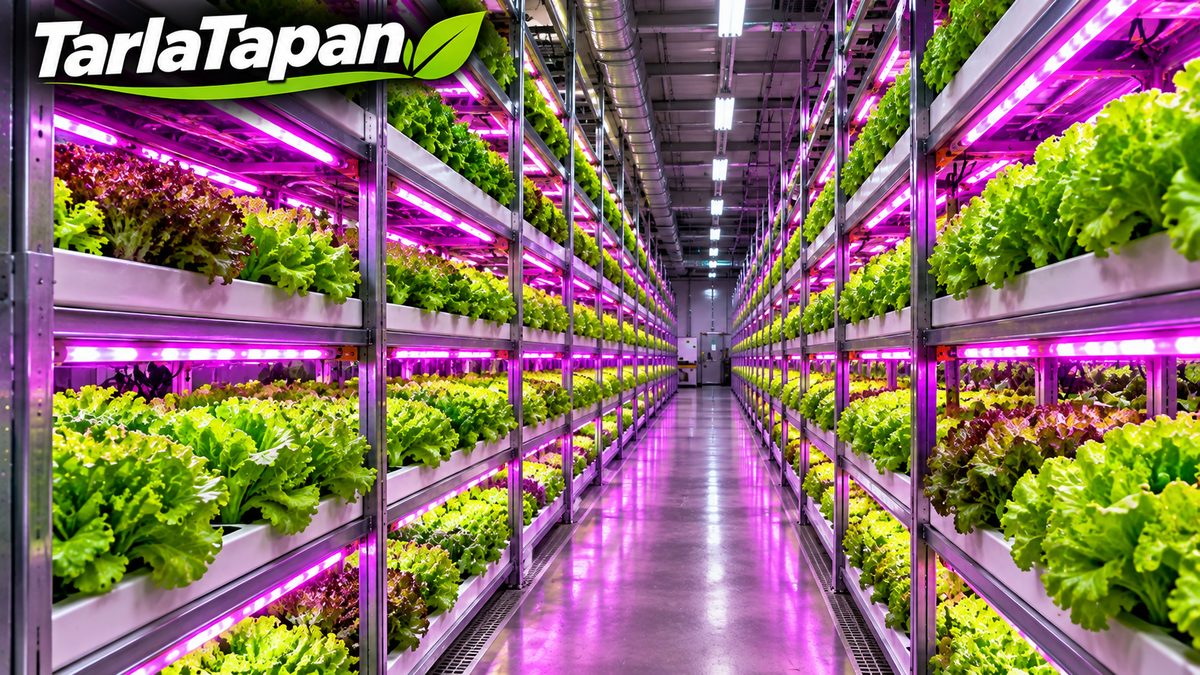
What is vertical farming? It is a way of growing crops indoors in stacked layers instead of spreading them across a field. Plants sit on shelves or towers, their roots are fed with nutrient water instead of soil, LED lamps replace the sun, and temperature and humidity are controlled by machines. The USDA Agricultural Research Service (ARS) puts it simply: traditional farming plants crops in soil on open fields with natural sunlight, while vertical farming takes place inside, grows crops in stacked layers and uses soilless systems such as hydroponics or aquaponics.
In short, a vertical farm tries to do the work of an acre of field inside one floor of a building. This guide explains how the system works, where vertical farms are built, which crops make sense and which do not, and whether the idea really pays off for a grower.
Contents
- Vertical farming in one sentence
- How does a vertical farming system work?
- A short history of vertical farming
- Where are vertical farms built?
- What grows well and what does not
- Vertical farm vs greenhouse vs field
- Is vertically farmed food healthy?
- Is vertical farming right for a farmer?
Vertical farming in one sentence
Vertical farming is the practice of growing plants on top of each other rather than side by side, so the same floor area produces several layers of crops. It is also called indoor farming, stacked farming or controlled environment agriculture (CEA) when the whole climate is managed.
Every vertical farm has three basic parts:
- Layers: Shelves, towers or wall panels. Plants can be stacked from two to more than ten levels.
- Soilless growing: Roots stand in nutrient water, are misted with nutrients, or use water from a fish tank.
- Controlled climate: Light, temperature, humidity and carbon dioxide are set independently of the weather outside.
The German Federal Information Centre for Agriculture (BZL) describes vertical farms as closed rooms that grow vegetables year-round on several floors, mostly with LED light and climate control. Three key words hide in that definition: closed, stacked and year-round.
We cover each part of the topic in its own article. For a step-by-step setup see how to start a vertical farm, and for the different systems see types of vertical farming.
How does a vertical farming system work?
A vertical farming system gives the plant by machine everything it would get from nature in a field: light from lamps, water and fertilizer from pumps, and air from fans and air conditioning. The grower's job is to keep those machines set correctly.
A typical day in a commercial farm looks like this:
- Seedlings: Seeds are sown into small sponges or rockwool cubes and kept in a germination room for a few days.
- Moving to the racks: Once roots appear, seedlings are placed in perforated boards and slid onto the shelves.
- Feeding: A pump sends a nutrient solution with nitrogen, phosphorus, potassium and trace elements to the roots. Excess water returns to the tank.
- Lighting: LED lamps hang above every shelf. Light hours and color are adjusted to the crop.
- Climate: Air conditioners and dehumidifiers keep temperature and humidity steady. Some farms also add carbon dioxide.
- Harvest: Crops like lettuce are cut whole, the shelf is cleaned and new seedlings go in.
According to BZL, in one large farm in England the plants grow without soil on plastic boards and receive water and nutrients through a computer-controlled recirculating system. The same source reports that the lamps there run 24 hours a day and that waste heat from the LEDs is used to warm the room.
One point matters more than any other: the system is independent of the weather but completely dependent on electricity. When power fails, pumps stop, roots lose oxygen and damage starts within hours. Serious farms therefore keep a generator or backup power supply.
A short history of vertical farming
The idea of growing upward is old. Grow Magazine from the University of Wisconsin notes that maximizing space by growing up is as old as the terraced farms of Asia and the Andes or the fabled Hanging Gardens of Babylon. Many of those terraces still feed people today.
The modern term goes back to the early 20th century. According to Wikipedia, American geologist Gilbert Ellis Bailey first used the phrase "vertical farming" in a 1915 book of the same name. The skyscraper farm idea was later popularized from 1999 onward by Dickson Despommier of Columbia University.
The real turning point was cheap LED lighting. Grow Magazine explains that the biggest difference between ancient terraces and modern vertical farms is our recent ability to grow crops with no natural light at all. That is what makes stacking crops on top of one another possible.
Where are vertical farms built?
Vertical farms are built in empty warehouses, factories, shipping containers, supermarkets, rooftops and even old mines. Grow Magazine lists old warehouses, factories, shipping containers and abandoned mines as typical locations.
The most common places are:
- Urban warehouses: Close to buyers, so delivery is short.
- Container farms: USDA ARS describes repurposing shipping containers into vertical farming research units. A container is mobile and provides a ready shell.
- Supermarkets: BZL reports that the Swedish company SweGreen designs farms small enough to fit into a supermarket's produce section, where the harvest is sold on the spot.
- Homes: Countertop gardens with their own light and water supply are sold for home use.
- Deserts and dry regions: USDA ARS notes that vertical farms are being built in deserts and in places where open-field farming is not practical.
One large example sits in Norfolk, England. According to BZL it produces about 6.5 tonnes of leafy greens per day on 25,000 square meters. The same source states that the world's largest vertical farm is in Dubai, with a base area of more than 30,000 square meters on three floors. The reason Gulf countries invest is clear: little water, little farmland, plenty of solar energy.
What grows well and what does not
The best crops for vertical farming are short, fast-growing plants that are harvested whole, such as lettuce, spinach, arugula, basil and mint. Field crops like wheat, corn and sunflowers can technically grow indoors but do not pay.
USDA ARS researchers say lettuce and other leafy greens are currently the most popular vertical farm crops. The reason is simple: lettuce is sold whole, while with corn only the cob is sold and the rest must be disposed of. The same agency states plainly that cereal and row crops such as corn, rice, wheat and soybeans are still better suited for traditional farming.
Research continues on strawberries, tomatoes and peppers. Grow Magazine, however, points out that cucumbers, tomatoes and peppers need so much light to flower and fruit that growing them without the sun is not feasible. See our full list in what can you grow in a vertical farm.
| Crop group | Fit for vertical farming | Why |
|---|---|---|
| Lettuce, arugula, spinach | Excellent | Short, fast, harvested whole |
| Basil, mint, parsley | Excellent | High price per pound |
| Microgreens | Excellent | Harvested within weeks |
| Strawberries | Under research | Need light and pollination |
| Tomatoes, peppers, cucumbers | Difficult | Need a lot of light to fruit |
| Wheat, corn, sunflowers | Not suitable | Low value, need space |
Vertical farm vs greenhouse vs field
What separates a vertical farm from a greenhouse is sunlight. A greenhouse takes sun through glass and has one level; a vertical farm often receives no sun at all and has many levels. An open field controls neither light nor air.
| Feature | Field | Greenhouse | Vertical farm |
|---|---|---|---|
| Light | Sun | Sun, extra lamps if needed | Mostly LED only |
| Levels | One | One | Many |
| Soil | Yes | Yes or soilless | Usually soilless |
| Season | Weather-bound | Extended season | Year-round |
| Water | Most | Medium | Least |
| Energy | Lowest | Heating | Lighting plus HVAC, highest |
The water gap is large. Grow Magazine writes that indoor hydroponic systems that recirculate water use as little as 10% of the water needed to irrigate a field. BZL gives a range of 5 to 10 percent.
The yield gap is large too. According to USDA ARS, for some crops 10 to 20 times the yield can be obtained per acre in vertical farming compared to open-field crops. That figure comes from the number of layers; a single plant does not grow twenty times bigger.
Energy is the weak point. We go through the numbers in pros and cons of vertical farming.
Is vertically farmed food healthy?
Vertically farmed produce is as healthy as the same variety grown in a field; its nutritional value is not meaningfully different. USDA ARS scientists explain that most varieties used in vertical farms are the same ones used outdoors, so nutrition, taste and quality are typically the same or similar.
The advantage is hygiene. According to the same source, vertical farm crops can often be grown without pesticides and are much less likely to be contaminated by pathogens harmful to humans such as E. coli. Insects and diseases do not easily enter a closed room.
It is not correct, however, to call all vertical farm produce organic. Plants receive their fertilizer as mineral salts dissolved in water, and in the European Union organic rules are based on soil-grown production, so soilless produce does not qualify there. Nor is it true that diseases never appear indoors; once root rot enters the water, it spreads across a whole rack. We explain this in vertical farming pests and diseases.
Is vertical farming right for a farmer?
Vertical farming will not replace a farmer's wheat or soybean field, but it can be an extra income for a grower near a city who can sell greens and herbs and has cheap electricity. Before deciding, answer these questions:
- Is there a buyer? Lettuce and herbs are sold fresh. Building racks without a restaurant, hotel or grocery deal is risky.
- What does power cost? Electricity is the biggest expense. Without solar panels or a low tariff, the numbers rarely work.
- Is there a building? An empty barn, warehouse or container cuts construction cost.
- Is there know-how? Nutrient solutions, pH and hygiene are a different job from field farming. USDA ARS admits that knowledge on maximizing crop productivity in controlled environments is still limited.
Grow Magazine reaches a balanced conclusion: vertical farms make sense where land and water are scarce, especially if renewable energy is available, and they can give new purpose to vacant buildings. We run the numbers step by step in do vertical farms make money.
Frequently Asked Questions
What is vertical farming in simple words?
Vertical farming is growing plants indoors on shelves stacked on top of each other, usually without soil and under LED light. Light, temperature, humidity and fertilizer are controlled by machines. This lets growers harvest year-round on a small footprint.
Where is the world's largest vertical farm?
According to the German agricultural information centre BZL, the world's largest vertical farm is in Dubai. It covers a base area of more than 30,000 square meters and grows vegetables on three floors. Europe's largest farm of this type is in Norfolk, England.
Is vertical farming the same as hydroponics?
Vertical farming and hydroponics are not the same thing. Hydroponics describes how plants are fed, with nutrient water instead of soil, while vertical farming describes how plants are arranged, in stacked layers. Most vertical farms use hydroponics, but hydroponics can also be done in a single-level greenhouse.
Can you grow wheat in a vertical farm?
You can grow wheat in a vertical farm, but it does not pay. USDA ARS states that cereal and row crops such as corn, rice, wheat and soybeans are still better suited for traditional farming. The price of wheat cannot cover the electricity and building costs.
Is vertical farming the future of agriculture?
Vertical farming will not replace fields, but it may take a large share of the leafy greens market. One USDA ARS scientist estimates that vertical farming could take over roughly half of the U.S. leafy greens market within ten years. Grains and legumes will stay in the field.
TarlaTapan guides focus on practical, field-tested growing advice. Corrections and suggestions are welcome at info@tarlatapan.tr.