Red Mites in Chicken Coop: Signs, Treatment and Other Pests
Red mites in a chicken coop: how to spot them, the paper towel test, cleaning and repeat schedule, plus lice, scaly leg mites, rodents, flies and predators in backyard coops.
Red mites in chicken coop setups are poultry red mites (Dermanyssus gallinae), a night-time parasite. They hide in cracks and crevices during the day and come out at night to suck the birds' blood. Turkey's Ministry of Agriculture and Forestry, through its Bornova Veterinary Control Institute, describes them as a night parasite seen especially in laying hens. To get rid of them you treat the coop first, not just the birds, and you repeat the treatment about a week later.
This article covers the pests most common in backyard coops. If birds are visibly ill, always see a veterinarian; choosing medicines and doses is a vet's job.
How to recognize red mites
According to the Bornova institute, mites usually stay on a bird for only one to two hours to feed. A freshly fed mite is bright red and darkens as it digests the blood. During the day you rarely see them on the birds, so the signs matter:
- Hens refuse to go into the coop at night or sleep on the floor instead of the roost.
- Combs and wattles turn pale; heavy infestations cause anemia.
- Laying drops and eggs show small reddish-brown spots.
- Hens abandon the nest boxes.
- You get itchy after working in the coop.
- Grey-white, ash-like deposits appear at roost ends and joints; these are mite droppings and shed skins.
What red mites do to your hens
A single mite looks harmless, but in a heavy infestation one hen can be fed on by thousands every night. The result is anemia: pale comb and face, weakness, loss of appetite. Constant itching and broken sleep raise stress, weaken immunity and leave birds open to other diseases. Egg production falls and nests are abandoned.
Chicks and broody hens are the most at risk. A broody hen does not leave the nest at night, so mites reach her directly; in severe cases she can die. Clean and check a brooding nest before every use. Mites are also reported to carry some poultry diseases, so a long infestation is a real flock health risk, not just a nuisance.
The paper towel test
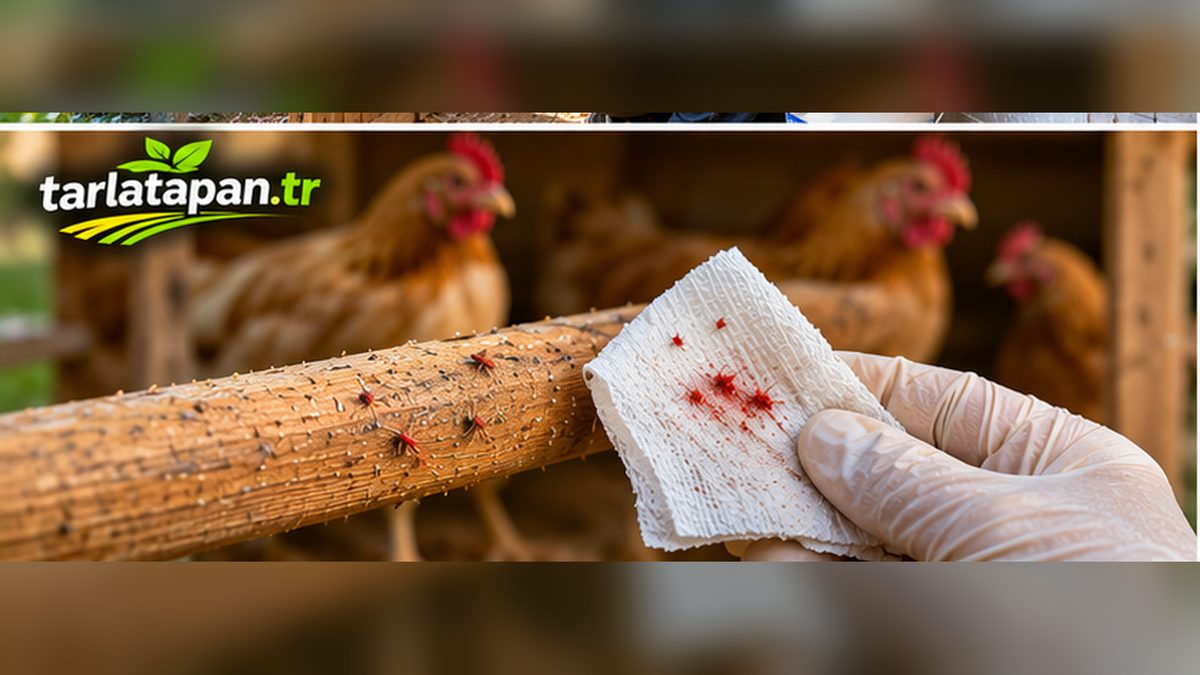
The simplest check: look at the roost with a flashlight after dark, or during the day wipe a white paper towel along the underside and ends of the roost. Red or brown smears mean mites. A strip of corrugated cardboard wrapped around a roost end and opened a day or two later also reveals them. In summer, do this check weekly.
Why red mites multiply so fast
The Bornova institute reports that at 15 to 35 °C and humidity above 60%, the mite can complete its life cycle, including one larval and two nymph stages, within a week. So in warm, humid months, new mites hatch a week after a single cleaning. Mites can also survive a long time without feeding, so an empty coop does not clean itself.
How to get rid of red mites
Lasting control has four steps:
- Mechanical cleaning: Empty the coop and take all bedding and nest material well away. Remove roosts and scrape cracks and joints.
- Washing and heat: Pressure-wash the surfaces. A steam cleaner kills mites and eggs inside cracks.
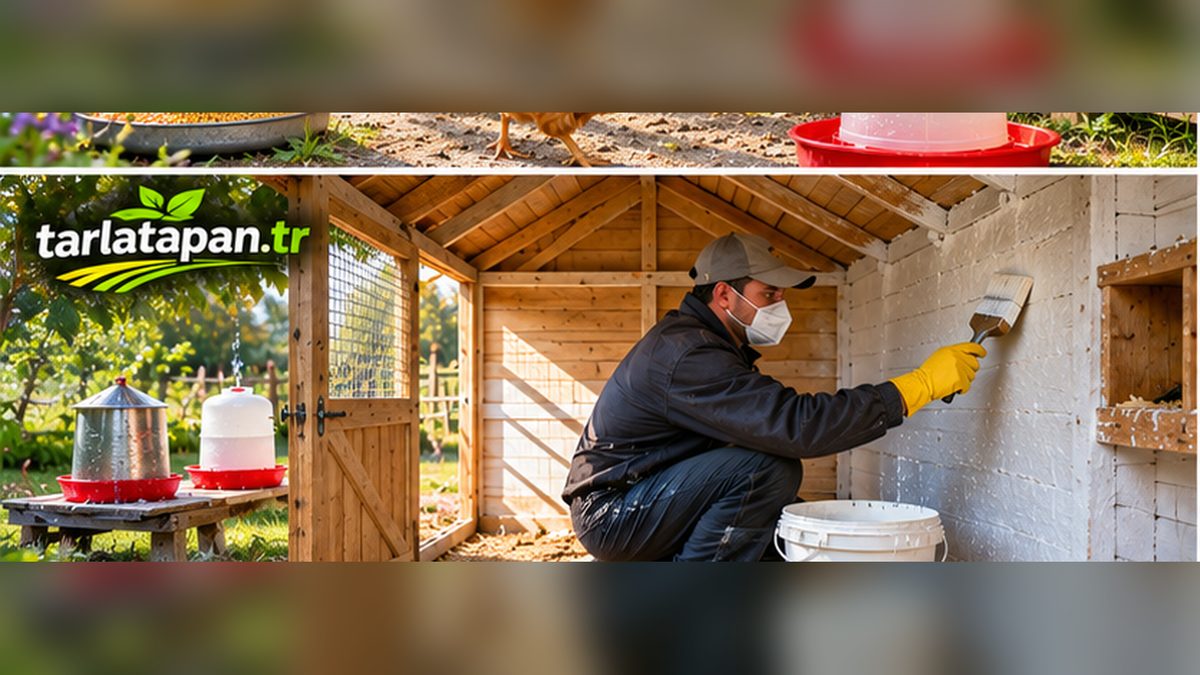
- Dry and treat: On dry surfaces, apply lime wash or a product licensed for poultry housing at the label rate, as recommended by your vet. Some products cannot be used with birds present, and some have an egg withdrawal period.
- Repeat: Repeat about 7 days later, and again if needed. The Bornova institute also stresses repetition to break the life cycle.
Seal cracks with caulk or filler, and build roosts that are removable with smooth surfaces. The full deep-clean process is in how to clean a chicken coop.
Do diatomaceous earth and ash work?
Diatomaceous earth and wood ash dry out the mite's outer layer and help in cracks and in dust baths. On their own they will not end a heavy infestation, and both birds and people inhale the fine dust. If you use them, wear a mask and avoid raising a cloud. Diesel, motor oil and crop pesticides are not licensed for poultry and harm birds and eggs; do not use them.
Lice and other external parasites
| Pest | Where it lives | Sign | Control |
|---|---|---|---|
| Poultry red mite | Coop cracks, on birds at night | Pale comb, avoiding the roost | Coop treatment plus repeat after 7 days |
| Northern fowl mite | On the bird all the time | Darkened feathers around the vent | Treat the birds, ask a vet |
| Chicken lice | At feather bases, always on the bird | Egg clusters at feather bases, scratching | Dust bath, vet-recommended product |
| Scaly leg mite | Under leg scales | Raised, crusty leg scales | Veterinary treatment |
| Fleas and bed bugs | Bedding, nests, cracks | Restlessness, bites | Cleaning, bedding change |
Unlike red mites, chicken lice live on the bird and do not suck blood; they feed on feather and skin debris. A dust bath of dry soil or sand helps hens clean themselves.
Rodents and flies
Mice and rats steal feed, eat eggs and chicks, and carry disease. Penn State Extension notes that a concrete floor and walls starting with concrete block stop rodents, snakes and predators from digging under, and recommends storing feed in lidded metal cans.
- Pick up spilled feed every evening.
- Keep grass short around the coop and do not stack wood against it.
- Cover or bring in feeders at night.
- Keep bedding dry and cover manure on the compost pile to reduce flies.
Predators
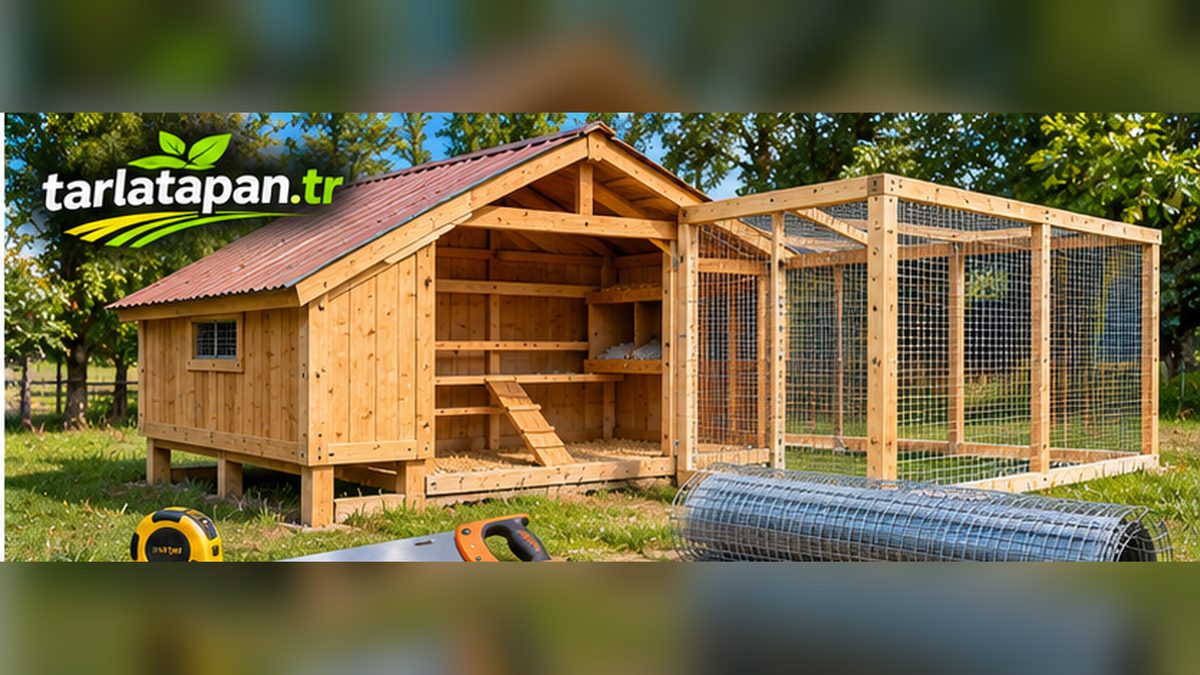
Penn State Extension says fully fenced, covered runs are the best predator protection. Bury the wire at least 12 inches and bend the bottom 6 inches outward; cover the top with wire or netting against hawks and owls. If the run is not secure, lock birds in before dark. Sizes and wire details are in how to build a chicken coop.
New birds and quarantine
Most mites, lice and diseases arrive with new birds, borrowed crates or boots from another flock. Keep new birds separate for at least two weeks, check them for mites and lice, then add them to the flock. Separate any bird that looks sick right away.
Prevention schedule
| How often | Task |
|---|---|
| Daily | Behavior, comb color, avoiding the roost |
| Weekly | Paper towel test, roost ends, nest corners |
| Monthly | Check feather bases and leg scales |
| Spring and fall | Deep clean and crack repair |
| New birds | Two-week quarantine |
The full daily routine is in chicken coop maintenance, and hot-weather precautions are in winter and summer chicken coop care.
Frequently Asked Questions
How do you treat chickens for red mites?
You treat chickens for red mites by cleaning the coop first, because mites hide in cracks during the day. Empty, scrape, wash, dry and treat the coop, then repeat about 7 days later. Ask a vet about treating the birds themselves.
Can chicken red mites live on humans?
Chicken red mites cannot live and breed on humans, but they can bite people who work in the coop. Bites cause itching and red skin. Changing clothes and washing after coop work is enough.
How long do red mites live without a host?
Red mites can live for a long time without a host in an empty coop. That is why an empty coop does not clean itself. Do not return birds until the coop is cleaned and the treatment repeated.
What kills chicken lice?
Chicken lice are killed by products licensed for poultry and recommended by a vet. Dust baths and diatomaceous earth help but rarely end a heavy infestation alone. Never use diesel or crop pesticides.
When are red mites worst?
Red mites are worst in warm, humid months. At 15 to 35 °C and humidity above 60%, they can complete their life cycle in a week. That is why weekly checks matter most in summer.
TarlaTapan guides focus on practical, field-tested growing advice. Corrections and suggestions are welcome at info@tarlatapan.tr.