What Can You Grow in a Vertical Farm? Best Crops List
What can you grow in a vertical farm? Lettuce, arugula, spinach, basil, mint, microgreens and strawberries. Why tomatoes and wheat are hard, plus a crop-by-crop table.
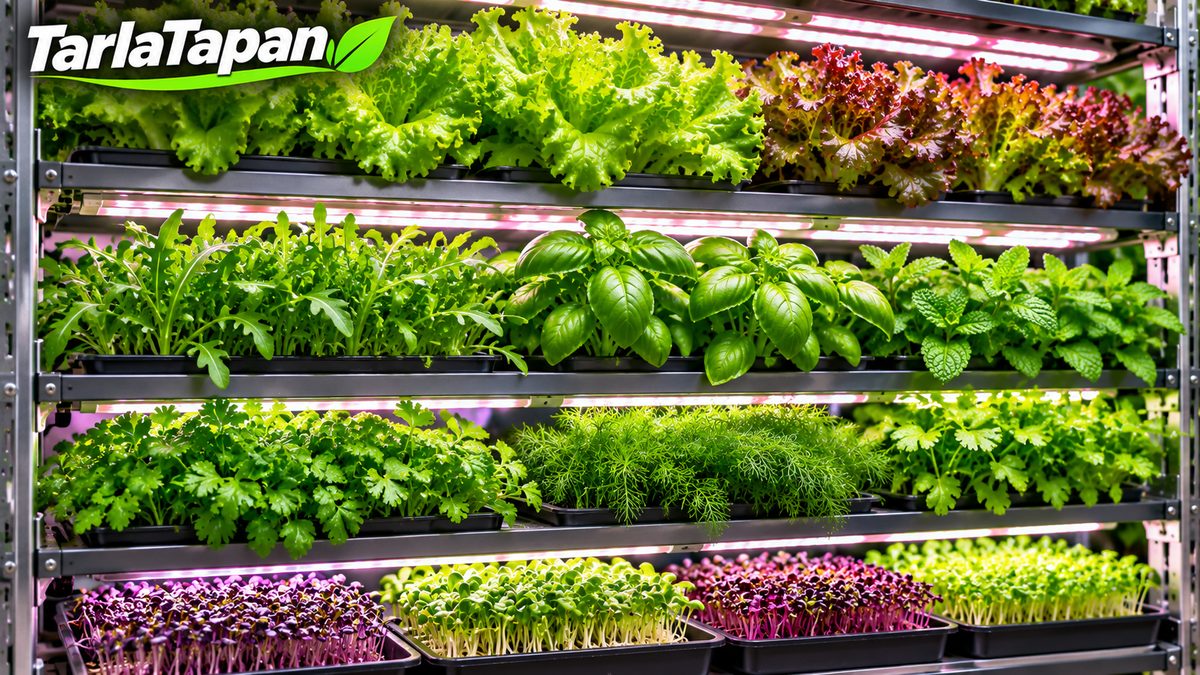
What can you grow in a vertical farm? The short answer: short, fast-growing plants that need little light and sell at a high price per pound. Lettuce, arugula, spinach, basil, mint, parsley and microgreens lead the list. USDA ARS researchers say lettuce and other leafy greens are currently the most popular vertical farm crops.
Technically, almost any plant can grow indoors. The real question is whether the crop pays for the electricity and the building. This article sorts crops with that question in mind. For the basics, see what is vertical farming.
How to choose a crop for vertical farming
When choosing a crop for vertical farming, look at four things: height, growing time, light demand and how much of the plant you can sell. According to USDA ARS, the most successful crops today can be grown hydroponically, have short compact growth forms and can be harvested in their entirety.
- Height: Shelf spacing is tight. Tall plants reduce the number of levels.
- Time: Fast growth means more harvests per shelf per year.
- Light: Fruiting plants need a lot of light, which shows up on the power bill.
- Harvest share: In the USDA ARS example, lettuce is sold whole, while corn is grown for the cob and the rest is waste.
- Price: BZL writes that vertical production pays mainly for vegetables that fetch a high price per weight and can be planted densely.
Leafy greens
Leafy greens are the core of vertical farming. UMN Extension writes that lettuce and brassicas such as mustards and kale grow well year-round in hydroponic systems, and that other greens such as Swiss chard and amaranth also work well.
- Lettuce: The most common vertical farm crop. According to UMN Extension, lettuce can be harvested in 6 to 7 weeks. Leaf lettuce can be cut several times; head lettuce is harvested once.
- Arugula: Grows fast and regrows after cutting.
- Spinach: Prefers cool rooms and bolts quickly in heat.
- Kale and mustard greens: Brassicas that suit soilless systems.
- Swiss chard: Can be cut over a long period.
Herbs
Herbs are among the most profitable vertical farm crops because of their high price per pound. Grow Magazine writes that leafy greens, herbs and microgreens have proven cost-effective in vertical farms. BZL notes that many vertical farms focus on lettuce and basil.
- Basil: Restaurants buy it constantly. It likes warm rooms.
- Mint: Very easy and spreads quickly.
- Parsley and dill: Used daily in kitchens and sold fresh.
- Cilantro: Bolts in heat, so it needs a cool room.
UMN Extension notes that most herbs can be harvested several times, and that growers usually harvest 3 to 5 times from the same plants before starting over with new seed.
Microgreens
Microgreens are vegetable seedlings cut just after the first leaves open. Radish, broccoli, sunflower and pea shoots are the best known. Because they need very little height, many trays fit on one shelf, and they are ready within weeks. Grow Magazine lists microgreens among the crops that have proven cost-effective.
Strawberries and fruiting vegetables
Strawberries, tomatoes and peppers can grow in vertical farms, but they are hard. USDA ARS is researching the vertical farming potential of small fruits such as strawberries and fruiting vegetables such as tomatoes and peppers. One of its scientists estimates that within ten years a small share, about 5 percent, of the U.S. strawberry and tomato markets could move to vertical farms.
Grow Magazine is more cautious: cucumbers, tomatoes and peppers need so much light to flower and fruit that growing them without the sun is not feasible. UMN Extension also notes that these heat-loving plants can be grown indoors with added heat and light, but the cost would be prohibitive for most gardeners.
For soilless strawberries and tomatoes, a sunlit greenhouse with drip irrigation is usually the better route. We compare the options in types of vertical farming.
Crops that do not work in vertical farms
Grains, legumes and row crops do not pay in vertical farms. USDA ARS states that cereal and row crops such as corn, rice, wheat and soybeans are still better suited for traditional farming. BZL adds that staples such as grains and legumes cannot be grown economically in these facilities.
The reason is arithmetic. The price of a pound of wheat cannot cover the lamp electricity needed to grow it. Root and tuber crops such as potatoes, onions and carrots also take up space and grow slowly. Some USDA ARS programs are researching apple, citrus and peach trees, but these are not commercial yet. Grow Magazine also stresses that urban vertical farms will not provide the calories needed to fight hunger.
How to choose a variety
Not every variety of a crop suits vertical farming. UMN Extension recommends seed companies that identify varieties as doing well in hydroponic systems. For fruiting crops, the same source suggests looking for terms like "grows well in pots" or "container variety".
When choosing a variety, look for:
- Compact or dwarf habit: Fits between shelves.
- Bolt resistance: Lettuce, spinach and cilantro varieties that resist flowering in warm rooms give longer harvests.
- Disease resistance: Downy mildew-resistant lettuce and basil cut losses.
- Market preference: Buyers differ on leaf type and color.
UMN Extension's lettuce trials show that light color matters too: less blue light gives milder, flatter lettuce, while more blue light gives spicier, curlier leaves.
Crop-by-crop suitability table
| Crop | Suitability | Harvest | Note |
|---|---|---|---|
| Lettuce | Excellent | Whole or cut | Most common crop |
| Arugula | Excellent | Cut | Fast |
| Spinach | Good | Cut | Needs cool room |
| Basil | Excellent | Cut | High price |
| Mint | Excellent | Cut | Easy |
| Parsley | Good | Cut | Sold fresh |
| Microgreens | Excellent | Trays | Shortest cycle |
| Kale | Good | Cut | Brassica |
| Strawberries | Difficult | Fruit | Needs light and pollination |
| Tomatoes, peppers | Difficult | Fruit | Need a lot of light |
| Wheat, corn | Not suitable | Grain | Does not pay |
| Potatoes, onions | Not suitable | Tuber, bulb | Need space and time |
Who buys vertical farm produce?
The easiest buyers for vertical farm produce are restaurants, hotels, cafés and grocery stores that want fresh greens and herbs year-round. Local, pesticide-free produce in winter is a selling point.
Talk to the buyer before you plant: how much of each crop they need per week, whether they want living lettuce with roots or cut leaves, packaging and price. Growing first and looking for buyers later is the biggest risk with fast-perishing greens. For the numbers, see do vertical farms make money.
Frequently Asked Questions
What is the most profitable crop in a vertical farm?
The most profitable vertical farm crops are herbs such as basil, microgreens and specialty greens. They grow fast, need little light and sell at a high price per pound. Grow Magazine writes that leafy greens, herbs and microgreens have proven cost-effective.
Can you grow tomatoes in a vertical farm?
You can grow tomatoes in a vertical farm, but making a profit is hard. Tomatoes need a lot of light and heat to fruit, which drives up electricity costs. A sunlit greenhouse with drip irrigation is usually a better choice.
Can strawberries be grown in vertical farms?
Strawberries can be grown in vertical farms, and research is ongoing. USDA ARS is studying the vertical farming potential of strawberries. They need more light and pollination than leafy greens.
Can you grow wheat in a vertical farm?
Growing wheat in a vertical farm is possible but not economical. USDA ARS states that wheat, corn, rice and soybeans are still better suited for field farming. The price of wheat cannot cover lamp and building costs.
What can you grow in a home vertical garden?
In a home vertical garden you can grow lettuce, arugula, basil, mint, parsley and microgreens. These plants are short and fast, so they fit on small shelves. Our setup guide explains how to start a vertical farm at home.
TarlaTapan guides focus on practical, field-tested growing advice. Corrections and suggestions are welcome at info@tarlatapan.tr.