What Are the Pros and Cons of Vertical Farming?
What are the pros and cons of vertical farming? Less water, less land, year-round and pesticide-free crops versus high electricity use, carbon footprint and setup cost.
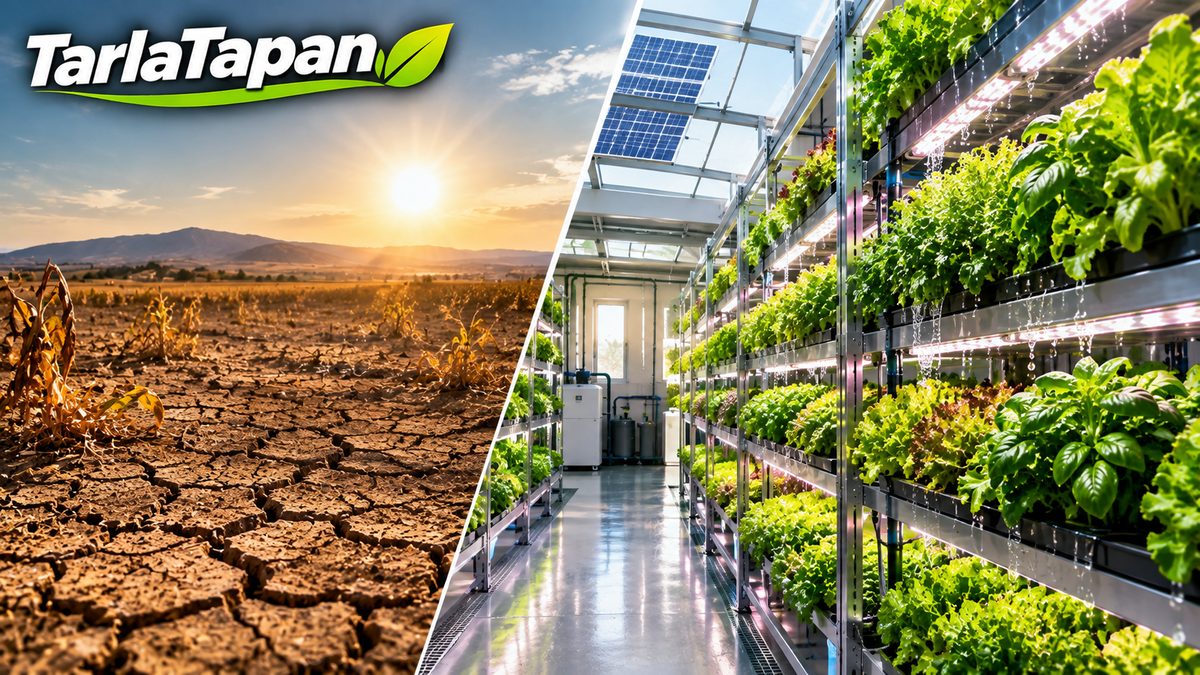
The pros and cons of vertical farming can be summed up in one line: it saves water and land and produces year-round, but it replaces free sunlight with expensive electricity. The advantages are very low water use, high output on a small footprint, protection from weather and, often, pesticide-free produce. The main drawbacks are energy cost, a large carbon footprint when power comes from fossil fuels, high setup cost and a short list of profitable crops. Grow Magazine from the University of Wisconsin puts it well: the benefits of vertical farming are real, but so are the costs.
This article weighs both sides with sourced numbers, from a grower's point of view. For the basics, see what is vertical farming.
What are the advantages of vertical farming?
The main advantages of vertical farming are water savings, land savings, year-round production, independence from weather, pesticide-free crops and proximity to cities.
It saves water
Vertical farms use far less water than fields. Grow Magazine writes that indoor hydroponic systems that recirculate water use as little as 10% of the water needed to irrigate a field. The German agricultural information centre BZL states that vertical farms need only 5 to 10 percent of what conventional farming uses.
The reason is simple: in a field, much of the water evaporates or drains deep into the soil. In a closed loop, water the plants do not take up returns to the tank. For drought-hit regions this is the biggest benefit.
It produces a lot on little land
Vertical farming takes several layers of crops from one footprint. USDA ARS researchers say that for some crops 10 to 20 times the yield can be obtained per acre compared to open-field crops. In BZL's example, a farm in England produces about 6.5 tonnes of leafy greens per day on 25,000 square meters.
These numbers come from stacking and continuous harvests. A field gives one or two crops a year, while lettuce can be grown back to back indoors.
It works year-round, whatever the weather
Hail, frost, floods and drought cannot reach a vertical farm. USDA ARS notes that vertical farms are enclosed and therefore not subject to extreme or inclement weather, and that regional or seasonal crops can be grown indoors year-round.
Crops are often grown without pesticides
Insects and diseases do not easily enter a closed room. BZL explains that indoor farms are kept fully closed so that pests and pathogens cannot get in, which allows growers to largely do without crop protection products. USDA ARS adds that produce is much less likely to be contaminated by human pathogens such as E. coli.
Less fertilizer runoff
In a field, surplus fertilizer washes into groundwater. According to BZL, the closed loop in vertical farms means much lower nutrient use and no nutrient surplus lost into the soil, which protects ground and surface water.
Shorter transport
A vertical farm can sit right next to its buyers. BZL notes that farms near cities shorten transport routes and cut greenhouse gas emissions. USDA ARS adds that urban consumers get easier access to fresher produce.
New life for empty buildings
Grow Magazine points out that vertical farms can create jobs and give new purpose to vacant buildings. An unused warehouse or barn can return to production.
What are the disadvantages of vertical farming?
The disadvantages of vertical farming are high electricity use, a large carbon footprint, high setup cost, a narrow range of profitable crops and the need for technical skill.
Electricity costs are high
A USDA ARS scientist calls giving up the sun, the most abundant and free source of energy on Earth, the major disadvantage. Stacked growing requires artificial light, which can become costly. Humidity control also requires expensive and energy-intensive heating, ventilation and air conditioning.
BZL likewise writes that, despite LED technology, electricity costs are so high that production so far only pays for high-priced vegetables.
The carbon footprint is large
Grow Magazine gives a striking comparison. A pound of field-grown lettuce trucked 1,000 miles produces a quarter pound of carbon dioxide. The fossil fuel burned to grow a pound of lettuce in a vertical farm produces 8 pounds of CO2.
The same source adds that even with renewables the cost remains high: it takes more than nine acres of solar panels to light one acre of crops in a vertical farm. Local does not always mean green.
Setup costs are high
Building, racks, lamps, pumps, climate control and automation add up to a large upfront investment. BZL notes that beyond investment costs, the electricity used by the many LED lamps is the biggest burden. For a worked calculation, see do vertical farms make money.
Not every crop works
Grow Magazine writes that because of high building, lighting and management costs, vertical farms only make sense for high-value crops that do not need much light. Leafy greens, herbs and microgreens have proven cost-effective, while cucumbers, tomatoes and peppers need too much light. BZL adds that staples such as grains and legumes cannot be grown economically in these facilities. Details are in what can you grow in a vertical farm.
It needs technical skill and constant monitoring
USDA ARS admits there is still a general lack of knowledge and experience in maximizing crop productivity under controlled conditions. pH, nutrient rates, hygiene and climate control are a different skill set from field farming. If the power fails, pumps stop and plants suffer quickly.
Pros and cons table
| Topic | Vertical farm | Open field |
|---|---|---|
| Water | 5-10% of field use | High |
| Yield per acre | 10-20x for some crops | Baseline |
| Season | Year-round | Weather-bound |
| Weather risk | None | Hail, frost, drought |
| Pesticides | Often not needed | Needed |
| Energy | Very high | Low |
| Crop range | Greens, herbs | Almost everything |
| Setup cost | High | Low if land is owned |
Water and yield figures come from BZL and USDA ARS.
Who benefits from vertical farming?
Vertical farming benefits growers who are short on water and land, have cheap power and sit close to buyers. Grow Magazine concludes that vertical farms make sense where land and water are scarce, especially if renewable energy is available. BZL also writes that in hot, dry regions vertical farming powered by solar energy can be very sensible.
For a farmer growing wheat, corn or soybeans, a vertical farm does not replace the field. For a grower with an empty building, solar panels and a restaurant or grocery customer, greens and basil can be an extra income stream. Grow Magazine also reminds readers that nearby greenhouses are a good alternative: heating a greenhouse is still cheaper and produces less CO2 than lighting an equivalent vertical farm.
Frequently Asked Questions
What is the biggest advantage of vertical farming?
The biggest advantage of vertical farming is water savings. Closed-loop systems use only about 5 to 10 percent of the water a field needs. Year-round harvests on a small footprint are a close second.
What is the biggest disadvantage of vertical farming?
The biggest disadvantage of vertical farming is energy use. Lamps replace the free sun, and climate control adds more cost. When the power comes from fossil fuels, the carbon footprint per pound of lettuce is much higher than for field lettuce.
Is vertical farming sustainable?
Vertical farming is sustainable in terms of water and fertilizer, but not automatically in terms of energy. Grow Magazine estimates that lettuce from a fossil-powered vertical farm produces far more CO2 than lettuce trucked from a distant field. Farms powered by solar energy reduce this drawback.
Is food from vertical farms healthy?
Food from vertical farms is as healthy as the same varieties grown in fields. According to USDA ARS, most vertical farms use the same cultivars, so nutrition, taste and quality are the same or similar. Produce is often pesticide-free and less likely to carry harmful pathogens.
Why is vertical farming not more common?
Vertical farming is not more common because electricity and setup costs remain high. BZL notes that most seasonal produce can still be grown much more cheaply in greenhouses or fields. That is why vertical farms focus on high-priced greens.
TarlaTapan guides focus on practical, field-tested growing advice. Corrections and suggestions are welcome at info@tarlatapan.tr.