Types of Vertical Farming: Hydroponics, Aeroponics, Aquaponics
Types of vertical farming explained: hydroponics, aeroponics and aquaponics; deep water culture, NFT, ebb and flow and drip; shelf, tower, container and building farms.
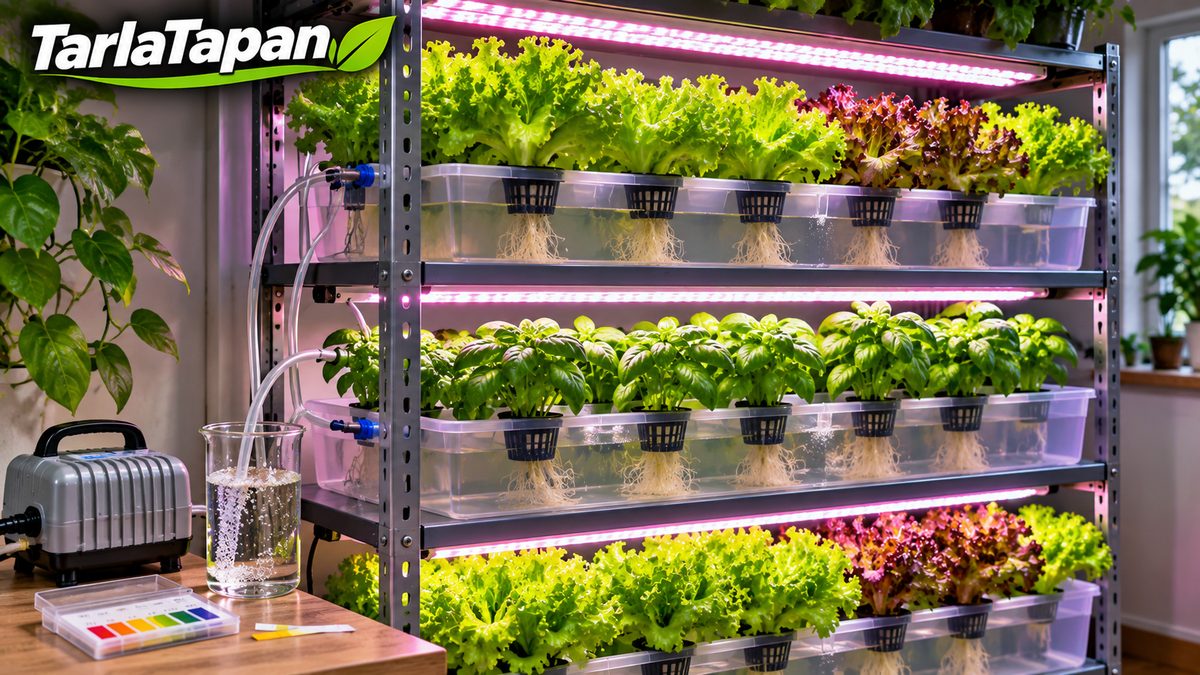
The types of vertical farming can be sorted in two ways: by how the plant is fed and by where and in what structure the farm is built. By feeding method there are three main systems: hydroponics, aeroponics and aquaponics. By structure there are shelf systems, towers, wall panels, container farms and building farms. USDA ARS describes vertical farming as growing crops in stacked layers using soilless systems such as hydroponics or aquaponics.
This article explains how each type works, its strengths and weaknesses, and who it suits. For the basics, see what is vertical farming.
Vertical farming types by feeding method
By feeding method, vertical farming types differ in how water and nutrients reach the roots. All three share one thing: no soil.
| System | Where the roots are | Strength | Weakness |
|---|---|---|---|
| Hydroponics | In nutrient water or a wet medium | Most common, easy to learn | Disease in the water spreads to all plants |
| Aeroponics | In the air, fed by nutrient mist | Least water, best aeration | Clogged nozzle dries roots fast |
| Aquaponics | In water from a fish tank | Fish supply the fertilizer | Two living systems to manage |
What is hydroponic vertical farming?
Hydroponic vertical farming feeds roots with fertilized water instead of soil. Most vertical farms use this method, and it has several sub-types.
Deep water culture
In deep water culture, the plant sits in a lid or floating foam board and its roots hang into the water below. UMN Extension calls it the most common system for small-scale growers and schools, and the least expensive and easiest to maintain and expand. Air is added with an airstone, or part of the roots is left in the air.
Nutrient film technique (NFT)
In nutrient film technique, plants sit in slightly sloped channels. A thin stream of water flows along the bottom and returns to the tank. UMN Extension notes that NFT scales easily from small to large production and is efficient for larger operations because water is managed from one central point. According to the same source, a table-top NFT system with six channels holds 36 plants.
Ebb and flow
In ebb and flow, plants grow in a tray filled with substrate. A pump floods the tray from a reservoir, and the water then drains slowly back through the medium. Kits are sold ready-made, and the system can also be built at home with buckets and plumbing parts.
Drip systems
A drip system is the soilless version of field drip irrigation. Water runs through hoses with holes at each plant. UMN Extension notes that this setup is becoming common in high tunnels, where farmers grow tomatoes and strawberries in long bags filled with coconut coir.
What is aeroponic vertical farming?
In aeroponic vertical farming the roots never sit in water; they hang in the air inside a closed chamber and are fed by nutrient mist from nozzles. Roots receive both moisture and plenty of oxygen, so they grow fast.
The weakness of aeroponics is its total dependence on pumps and nozzles. In deep water culture, roots stay wet for a while if the power fails. In aeroponics, roots begin to dry the moment the mist stops. UMN Extension reminds growers that in pump-driven systems, a malfunction or power outage cuts off water and plants can dry out quickly. Aeroponics therefore suits experienced growers with backup power.
What is aquaponic vertical farming?
Aquaponic vertical farming combines fish farming with soilless plant growing in a single water loop. According to BZL, aquaponic facilities link fish farming and soilless plant production inside one building through a shared water and nutrient cycle.
It works like this: fish waste builds up in the water, bacteria convert it into nitrate the plants can use, the plants take up those nutrients and the cleaned water returns to the fish. The grower sells both fish and vegetables.
Keep in mind that not everything good for plants is good for fish. UMN Extension warns that perlite can harm fish and should not be used in aquaponics. Pesticides also affect fish, so pests are handled by hand cleaning and beneficial insects rather than chemicals.
Vertical farming types by structure
By structure, vertical farms differ in how the layers are arranged.
- Shelf systems: The most common layout. Stacked shelves with LED lamps above each level. Used in warehouses and rooms.
- Tower systems: Plants sit around an upright pipe and water trickles from top to bottom. Many plants fit on a small footprint.
- Wall panels: Plants grow in pockets or panels fixed to a wall. Also popular as decoration on balconies and indoors.
- A-frame: In an example shown by UMN Extension, PVC tubes are mounted at an angle on an A-shaped frame. It takes sun from both sides.
Container, building and deep farms
Vertical farms also differ by location. Grow Magazine notes that vertical farms have been built in old warehouses, factories, shipping containers and abandoned mines.
| Farm type | Where | Suits |
|---|---|---|
| Container farm | Shipping container | Small start, mobile production |
| Building farm | Warehouse, factory, barn | Commercial production |
| Deep farm | Basement, tunnel, old mine | Crops needing stable temperature |
| In-store farm | Supermarket produce aisle | Grow and sell on site |
| Home farm | Kitchen, balcony | Own use |
USDA ARS describes turning old shipping containers into research farms and notes that containers and empty warehouses are easy to find and relatively cheap. BZL gives the example of small AI-controlled farms in Sweden that fit into a supermarket's produce section.
Types by light source
Vertical farms also split into two groups by light source. According to BZL, some systems work entirely without sunlight, while in other buildings sunlight enters through windows or special structures and is topped up with LEDs when needed.
- Fully closed (LED only): The same crop every season, but the highest electricity bill.
- Sunlight plus LED: Glass-walled buildings and greenhouses. Lower power use, but only upper levels benefit from the sun.
UMN Extension notes that LED lamps are very energy efficient, long-lasting and produce little heat. The same source explains that red light helps thicker stems and flowering, while blue light matters for leaves; for leafy greens alone, mostly blue light is enough.
Which type of vertical farming is right for you?
The right type depends on budget, experience and crop.
- First home trial: Deep water culture or a ready-made tower. See how to start a vertical farm.
- Small commercial start: NFT racks inside a container.
- Growers already raising fish: Aquaponics.
- Experienced farm with backup power: Aeroponics.
Whichever you choose, disease risk is managed the same way: clean water, clean equipment and no outside plants. Details are in vertical farming pests and diseases.
Frequently Asked Questions
What are the three main types of vertical farming?
The three main types of vertical farming are hydroponics, aeroponics and aquaponics. In hydroponics roots grow in nutrient water, in aeroponics they hang in the air and are misted, and in aquaponics they use water from a fish tank. Hydroponics is the most common.
What is the cheapest vertical farming system?
The cheapest vertical farming system is deep water culture. UMN Extension describes it as the least expensive and easiest system to maintain and expand. A bucket or tote, net pots and an aquarium pump are enough to build one.
Is aeroponics better than hydroponics?
Aeroponics gives roots better aeration, but hydroponics is safer. If an aeroponic pump or nozzle stops, roots dry out almost immediately. Hydroponics suits beginners, while aeroponics suits experienced growers with backup power.
What fish are used in aquaponics?
Aquaponics usually uses fish that tolerate warm water and dense stocking. Which species you may raise depends on local aquaculture rules. Check with your state or national fisheries authority before you start.
What is a container vertical farm?
A container vertical farm is a shipping container fitted with racks, LED lights and a soilless system. USDA ARS notes that containers are readily available and relatively inexpensive. Their advantages are mobility and a ready-made shell.
TarlaTapan guides focus on practical, field-tested growing advice. Corrections and suggestions are welcome at info@tarlatapan.tr.