How to Build a Chicken Coop: Sizes, Roosts and Nest Boxes
How to build a chicken coop: site choice, square feet per bird, roost and nest box measurements, floor, ventilation, predator-proof wire and a simple plan for 6-10 hens.
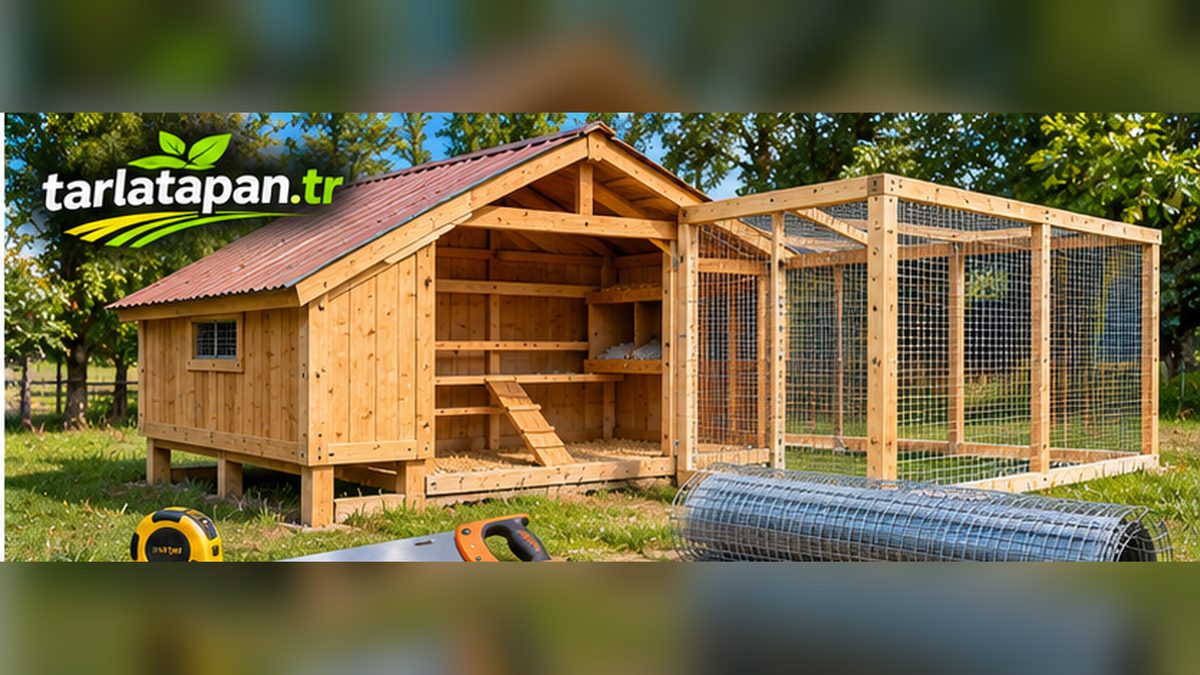
How to build a chicken coop in a few words: pick a high, well-drained spot, build a dry, draft-free room that predators cannot enter, fit it with roosts, nest boxes, a feeder and a waterer, and attach a wire-enclosed run. Penn State Extension notes that small coops come in almost every shape and size, but every one must protect birds from weather, predators, injury and theft.
This article is for backyard keepers planning 4 to 15 hens. For the daily jobs once the coop is up, see chicken coop maintenance.
Choosing the site
The site decides whether your coop will be dry or damp for its whole life.
- High, well-drained ground: Penn State Extension recommends building on high, well-drained areas. A coop in a hollow means a muddy floor and run.
- Face south: The same source suggests facing the coop front, windows and run to the south so the sun warms the coop and dries the soil.
- Back to the wind: Place openings on the side away from prevailing winds.
- Close to the house: You will visit every day, so make sure you can reach it in winter without wading through mud, and that water and power are nearby.
- Local rules and neighbors: Check zoning, flock limits and rooster rules before you build. Noise is the most common complaint.
How many square feet per chicken?
Penn State Extension's minimum space table (metric added):
| Bird type | Inside, per bird | Outside run, per bird |
|---|---|---|
| Bantam chickens | 1 sq ft (0.09 m²) | 4 sq ft (0.37 m²) |
| Laying hens | 1.5 sq ft (0.14 m²) | 8 sq ft (0.74 m²) |
| Large chickens | 2 sq ft (0.19 m²) | 10 sq ft (0.93 m²) |
These are minimums. Backyard hens spend whole days inside during bad weather, so 3 to 4 square feet per bird indoors is far more comfortable. Example: 8 laying hens technically fit in 12 square feet, but a 4 x 6 ft (24 sq ft) coop noticeably reduces odor, damp and pecking.
Roost measurements
Chickens spend the night on the roost. Good roosts protect feet and keep nest boxes clean.
- Length: Penn State Extension recommends 6 inches of roost per standard bird and 4 inches per bantam. In practice, 8 to 10 inches is more comfortable, especially in summer when birds spread out.
- Height: 18 to 24 inches above the floor for standard birds, 12 to 18 inches for bantams. The same source warns never to let chickens perch more than 4 feet off the floor, to avoid leg and wing injuries when jumping down.
- Spacing: About one foot between roosts.
- Heavy meat breeds: Penn State Extension advises against perches for large, meaty breeds because of joint damage.
- Material: A 2x4 board with rounded edges, wide side up, lets hens cover their feet with feathers in cold weather. Metal pipe is cold and slippery.
A removable droppings board under the roost makes daily cleaning much faster.
Nest box size and number
| Measurement | Penn State Extension recommendation |
|---|---|
| Size | At least 12 x 12 inches (30 x 30 cm) |
| Number | Two nests for the first four hens, then one per four more |
| Height | At least 2 feet off the ground |
| Distance from roosts | At least 4 feet |
| Front lip | 3-4 inches to hold nesting material |
| Lining | About 2 inches of clean, dry pine shavings |
Put nests in a dim, quiet corner, away from bright windows and busy doorways. A box that is too big invites several hens at once and more broken eggs. If the nest boxes sit higher than the roosts, hens will sleep in them and soil them.
What should the coop floor be?
| Floor | Pros | Cons |
|---|---|---|
| Concrete | Rodents, snakes and predators cannot dig in; easy to wash | Costly, cold, needs deep bedding |
| Raised wooden floor | Stays dry, suits portable coops | Rodents may nest underneath, wood can rot |
| Dirt | Cheap | Gets wet, is dug through, hard to clean |
Penn State Extension suggests a concrete floor for new coops and starting the walls with one or two courses of concrete block, so rodents, snakes and predators cannot dig under the walls. A slight slope toward the door helps wash water drain. Whatever the floor, add 2 to 4 inches of bedding on top.
Ventilation and light
A coop must be airy but draft-free. Penn State Extension says vents or windows should never open directly over the perching area, and openings should face away from prevailing winds, usually on the south or east side. In small coops, windows or vents on one side often provide enough airflow.
A practical rule: keep openings high, above roost level. Warm, moist air rises and leaves, while birds below stay out of the draft. Use sliding windows rather than ones that swing open; the same source notes that birds will roost on open sashes.
South windows give most of the light needed. Keepers who want winter eggs add one low-wattage bulb above the feeder.
Predator-proof wire and doors
Most backyard losses come from foxes, raccoons, weasels, dogs, cats and hawks.
- Hardware cloth: Cover windows and vents with heavy-gauge mesh. Ordinary chicken wire keeps chickens in but does not keep predators out.
- Buried apron: Penn State Extension advises burying run wire at least 12 inches deep and bending the bottom 6 inches outward. A digging animal hits wire and cannot get under.
- Covered top: Cover the run with wire or netting against hawks and owls.
- Secure latches: Use latches a raccoon cannot open. If the run is not predator-proof, lock birds inside before dark.
A simple plan for 6-10 hens
| Part | Size |
|---|---|
| Coop room | 4 x 8 ft (32 sq ft), 6 ft high at front, 5 ft at back, sloped roof |
| Run | 10 x 10 ft (100 sq ft), wire-covered top |
| Roosts | Two bars, 5 ft each, at 20 and 32 inches, 12 inches apart |
| Nest boxes | 3 boxes, 12 x 12 inches, 2 ft off the floor |
| Ventilation | Two high vents on the south side, covered with hardware cloth |
| Doors | People door plus a pop door (about 12 x 14 inches) with ramp |
Nail cleats about 3 inches apart on the ramp, as Penn State Extension suggests, so birds do not slip. Choose washable surfaces and cover any insulation so birds cannot peck at it; the same source warns that chickens will eat foam and board insulation.
Portable or fixed coop?
A portable coop, or chicken tractor, sits on wheels or skids and is moved to fresh grass every few days. Hens get new forage, the ground never turns to mud, and manure spreads itself. But portable coops get heavy above 4 to 6 hens, are more exposed to cold wind, and are less secure against predators.
A fixed coop costs more, yet with a concrete floor, buried wire and solid doors it works for many years. In cold climates and for flocks larger than about 8 birds, a fixed coop usually makes more sense. Some keepers combine both: a fixed coop for winter and a portable pen for summer. Once the coop is finished, plan cleaning from day one with how to clean a chicken coop.
Frequently Asked Questions
What is the easiest way to build a chicken coop?
The easiest way to build a chicken coop is a small framed shed on a dry base with a wire run attached. Fit one or two roosts, a few nest boxes, a feeder and a waterer. Keep the floor dry and cover it with shavings.
How big should a coop be for 10 chickens?
A coop for 10 laying hens should be at least 15 square feet, which is Penn State Extension's minimum. For comfort, plan 30 to 40 square feet inside and 80 to 100 square feet of run.
Should roosts be higher than nest boxes?
Roosts should be higher than nest boxes. Chickens want to sleep on the highest spot available. If nests are higher, hens sleep in them and the eggs get dirty.
What do you put on the floor of a chicken coop?
You put 2 to 4 inches of dry pine shavings, straw or hemp bedding on the floor of a chicken coop. Bedding soaks up moisture from droppings and reduces odor. Replace it as soon as it gets wet.
Which direction should a chicken coop face?
A chicken coop should usually face south with its door and windows. The sun warms the coop in winter and dries the floor. Vents go on the side away from the prevailing wind.
TarlaTapan guides focus on practical, field-tested growing advice. Corrections and suggestions are welcome at info@tarlatapan.tr.