Is Olive Farming Profitable in Australia? Costs, Risks and Lessons
Is olive farming profitable in Australia? Industry size, costs, years without income, risks, downsides of olive trees, the olive levy and lessons from growers.
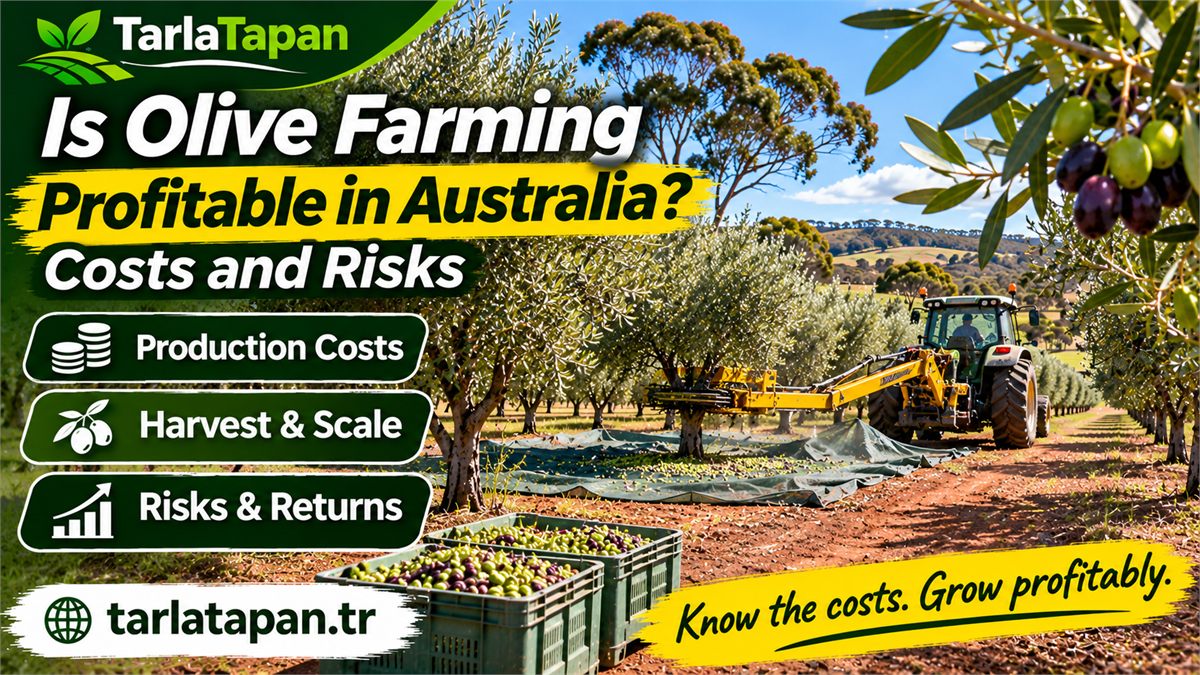
Is Olive Farming Profitable in Australia? Is olive farming profitable in Australia? It can be, but only for growers with good yields, tight cost control and enough scale. Industry benchmarking found that many growers earn too little per hectare. This guide explains what drives profit and the main risks before you invest in a grove.
How big is the Australian olive industry?
Australia has more than 10 million olive trees on about 21,000 hectares, mostly in the south of the country. Victoria is the largest producer, followed by Western Australia, South Australia and New South Wales. Most of the fruit is pressed for oil rather than sold as table olives.
The industry grew fast in the late 1990s and 2000s, partly through managed investment schemes. Many of those groves later changed hands or closed.
Is olive farming profitable?
Olive farming is profitable for some growers, but not for all. An industry benchmarking project funded through Hort Innovation compared farm results across Australia. It found that many growers had too little income per hectare, mainly because of low yields.
The same project set a simple target. Total cost of production per hectare, including finance, overheads, depreciation and the owner's own labour, should stay below about $10,000. Growers who keep costs under their income per hectare make money, and those who do not, lose it.
Why scale matters in olive farming
Scale matters because machines and labour are expensive. Benchmarking found that small groves can make a profit, but to use machinery and labour efficiently, a grove generally needs more than about 80 hectares.
Harvest is the biggest cost. Harvesting has typically been about half of total olive production costs. Large groves use over-row or trunk-shaker harvesters, which are only worth buying when there is enough area to keep them busy.
Main costs of an olive grove
- Establishment: land, trees, planting, trellis or stakes and irrigation.
- Water: irrigation is essential in most regions for good yields.
- Fertiliser and pest control: including olive lace bug and fruit fly control.
- Pruning and harvest: the largest yearly cost.
- Processing: pressing fruit into oil, either at your own mill or a contract mill.
- Marketing: bottling, labels and sales, if you sell your own oil.
Years without income
A new grove earns little or nothing for several years. Olive trees start bearing three to five years after planting, and full crops take longer. During this time you still pay for water, labour and loans.
This long wait has caught out many investors. In Queensland, an olive planting boom left many operations failing, partly because of high upfront costs and no output for several years.
Main risks for olive growers
- Alternate bearing: heavy and light years make income uneven.
- Drought and water prices: dry years cut yield or raise costs.
- Pests: olive lace bug can strip trees if not controlled. See our guide to olive lace bug in Australia.
- Weed rules: in some states wild olives are a declared weed, so groves must be managed and harvested.
How growers improve profit
Successful growers focus on yield first. They irrigate well, feed and protect trees, and prune every year. Many add value by bottling and selling their own oil direct to customers, at markets or online. Some run cellar doors or tourism alongside the grove.
To estimate output, read our guide on how many kg of olives per tree. For growing basics, see growing olive trees in Australia.
What are the downsides of growing olive trees?
The main downsides of olive trees in Australia are their slow start to production, alternate bearing, pollen allergies, staining fruit drop and their potential to become a weed near bushland.
- Weed risk: Birds spread olive seeds into bushland. Feral olives are a serious environmental weed in parts of South Australia and Victoria.
- Pollen: Olive pollen is a common spring allergen for some people.
- Mess: Ripe fruit stains paving and attracts birds.
- Uneven crops: Heavy and light years alternate.
- Pests: Olive lace bug, scale and black scale with sooty mould need control.
What is the olive levy?
The olive levy is a statutory levy paid by Australian olive growers and processors on the olives they produce. The money funds research and development for the olive industry.
The levy is collected by the government and invested through the industry's research body. Growers benefit from the research on varieties, pests, harvesting and oil quality, even if they are small producers.
Things growers wish they had known before buying an olive grove
Experienced growers often say the biggest surprises are the cost of harvesting and processing, the time it takes to sell the oil and the work required in the busy harvest weeks.
- Plan where and how your olives will be processed before you plant or buy.
- Selling is often harder than growing. A brand, local markets or a cellar door make a big difference.
- Older groves may need heavy pruning and replanting before they are productive.
- Water security and access to labour or machinery at harvest time are essential.
Visiting several working groves and talking to local growers is the best way to understand the real costs before committing. Some regions also run grower field days where you can see machinery and processing in action.
More Australian Olive Guides
- Growing Olive Trees in Australia
- Olive Lace Bug in Australia
- When to Harvest Olives in Australia
- Olive Trees in Pots in Australia
Frequently Asked Questions
How much land do you need for an olive farm in Australia?
Small groves can make money, especially if they sell their own oil direct. To use machinery and labour efficiently, industry benchmarking suggests a grove generally needs more than about 80 hectares.
How long before an olive grove makes money?
Olive trees start bearing three to five years after planting, and full crops take longer. Most groves have several years with little or no income. Plan finances for this waiting period before planting.
What is the biggest cost in olive farming?
Harvesting is usually the biggest cost. In Australia it has typically made up about half of total olive production costs. Machine harvesting lowers the cost per tonne on larger groves.
Where are most olives grown in Australia?
Most olives are grown in the southern half of Australia. Victoria is the largest producer, followed by Western Australia, South Australia and New South Wales. Tasmania grows olives on a smaller scale.
Is olive oil or table olives more profitable?
Most Australian olives are pressed for oil, which suits machine harvest and large groves. Table olives need hand picking and curing, which costs more. Small growers sometimes earn more by selling their own branded oil or cured olives direct.
TarlaTapan guides focus on practical, field-tested growing advice. Corrections and suggestions are welcome at info@tarlatapan.tr.