Do Olive Trees Grow Well in Australia? Regions, Varieties, Care and Harvest
Do olive trees grow well in Australia? Best regions, pots or ground, how long to fruit and full size, varieties, care, pests and harvest by state.
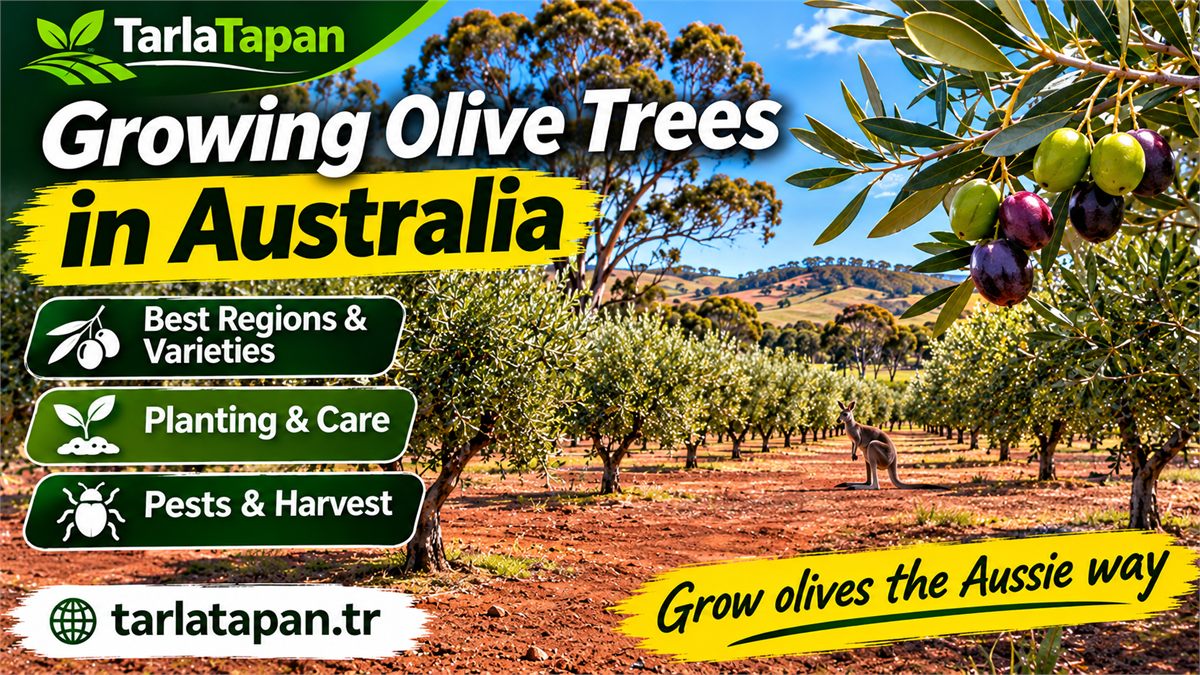
Do Olive Trees Grow Well in Australia? Growing olive trees in Australia works well across the southern half of the country. They like long, hot, dry summers and cool winters, which is the climate of much of Victoria, South Australia, Western Australia and inland New South Wales. This guide covers where olives do best, which varieties to choose, how to plant and care for them, and the rules you need to know before planting.
Where do olive trees grow best in Australia?
Olives grow best in the Mediterranean-type climates of southern Australia. Worldwide, olives are grown between about 30° and 45° from the equator. In Australia, the main olive areas sit between roughly 31° and 38° south.
Victoria is the biggest producer. A Tasmanian government industry profile put Victoria at about 63% of national output. Western Australia followed with 17%, South Australia with 11% and New South Wales with 9%.
In Western Australia, groves run from Chapman Valley in the north to Albany in the south. The Moore River area in the Shire of Gingin holds more than 70% of the state's olive trees. Tasmania grows olives too, but on a much smaller scale.
Tropical Queensland and the Top End are a poor match. Olives need a cool winter to flower well, and humid summers bring more fungal disease.
Can you grow olives in your backyard?
Yes, an olive tree is easy to grow in most southern Australian backyards. It needs at least six hours of direct sun a day and soil that drains freely. A single tree grows to about 6 metres tall and wide, so give it room.
Coastal gardens in Sydney, Perth and Adelaide suit olives well. Heavy clay is the main problem. If your soil holds water, plant on a raised mound or mix gravel and coarse material into the planting area.
If space is tight, grow a compact variety such as Arbequina, or keep a young tree in a large pot. See our guide to growing olive trees in pots for container details.
Are olive trees a weed in Australia?
In some states, wild olives are a declared weed. Birds eat the fruit and spread the seed into bushland. There, seedlings grow into thick stands that crowd out native plants.
South Australia has the strictest rules. Feral olive is a declared plant under the Landscape South Australia Act 2019. Landholders must control wild olives on their land. Cultivated groves that are maintained and harvested are not covered by this rule. The western slopes of the Adelaide Hills have some of the worst infestations.
Before planting, check your state and local council rules. The simplest way to stop spread is to harvest your fruit every year instead of letting it drop or feed birds.
Best olive varieties for Australia
The best variety depends on whether you want oil, table olives or both. Many varieties are grown in Australia, and most are of Spanish, Italian or Greek origin.
| Variety | Main use | Approx. mature height | Notes |
|---|---|---|---|
| Kalamata | Table | 8 m | Large, almond-shaped fruit |
| Frantoio | Oil | 8 m | Italian oil variety, fruity oil |
| Manzanillo | Table and oil | 5 m | Large fruit, popular for pickling |
| Picual | Oil | 6 m | High-yielding Spanish oil variety |
| Arbequina | Oil | 4–5 m | Compact, good for small gardens and pots |
Most olives can set some fruit on their own. Planting a second variety nearby often improves fruit set. For a deeper comparison, read our page on the best olive tree varieties.
When to plant olive trees in Australia
Plant olive trees in late winter or early spring, once the risk of hard frost has passed. In most of southern Australia this means August to October. Container-grown trees can go in until early summer, but they may drop leaves if stressed by heat.
Frost is the main risk for young trees. Temperatures below about -4°C can kill young trees and damage branches on older ones. In frost-prone inland areas, plant in a sheltered spot and cover young trees on cold nights.
Space trees at least 4.5 metres apart in each direction. Olive roots are shallow, so stake young trees in windy sites until they are well anchored.
How to care for an olive tree
Olive care is simple once the tree is established. The main jobs are watering young trees, feeding twice a year, pruning in winter and checking for pests.
Watering
Water young trees regularly through their first summer and in dry spells. Once established, olives tolerate drought. They still produce better fruit with deep watering in dry summers. Overwatering is a bigger risk than underwatering, because young trees can get root rot in wet soil. More detail is in our olive tree watering guide.
Feeding
Feed in early spring and again in late summer with a balanced fruit and citrus fertiliser. Spreading organic mulch over the root zone in spring also helps. Avoid too much nitrogen, which pushes leaf growth over fruit. See our olive tree fertiliser guide.
Pruning
Prune in winter. Remove suckers, low branches, dead wood and branches that cross through the centre. Opening the canopy lets in light and air, which helps both fruiting and disease control. Our step-by-step guide on how to prune olive trees shows the cuts.
Common olive pests and diseases in Australia
Olive lace bug is the most damaging pest in Australia. It is a native insect that feeds on the underside of leaves. Leaves turn yellow and drop, and a heavy attack can strip and even kill a tree. Check leaf undersides in spring and summer, and treat early with horticultural oil or pyrethrum.
Fruit fly also attacks olives in some areas. Pick up fallen and infested fruit. Seal it in a plastic bag and leave it in the sun for at least 7 days before disposal. Do not put infested fruit in the compost.
Peacock spot is a fungal disease that leaves dark round spots on leaves. It is worse in humid, wet areas. A copper fungicide in late autumn, repeated in early winter if needed, is the usual treatment. Read more in our pages on olive tree pests and olive tree diseases.
When to harvest olives in Australia
In Australia, olives are harvested from mid-autumn to early winter, which is roughly April to June. This is the opposite of the European season, so northern hemisphere harvest dates do not apply.
Pick table olives green when they start to change from dark green to a lighter green. Black olives are picked when fully coloured but still firm. For oil, fruit is often left until it begins to change colour or drop. Spread a sheet under the tree and shake or rake the branches.
Do not refrigerate fresh olives. Raw olives are very bitter and must be cured before eating. Our guide on when to harvest olives and how to cure them covers brining and other methods.
How long until an olive tree fruits?
Most olive trees start bearing three to five years after planting. Full crops take longer. Olives also crop in a two-year cycle: a heavy crop is often followed by a light one. Growers call this an "off year". Our article on how long an olive tree takes to fruit explains yields in more detail.
Are olive trees better in pots or in the ground?
Olive trees grow bigger, live longer and fruit more reliably in the ground, while pots keep them small, movable and suited to balconies and courtyards. If you want a real crop, plant in the ground; for decoration or a small harvest, a large pot works well.
In the ground, an olive tree's roots spread widely and find water deep in the soil, so it becomes drought-tolerant once established. In a pot, it depends entirely on you for water and food and needs repotting or root pruning every few years.
How long does it take for an olive tree to reach full size?
An olive tree usually takes around ten to fifteen years to reach its mature size in the ground. Growth is fastest in the first years and slows down once the tree starts carrying heavy crops.
Unpruned trees can eventually reach eight metres or more, but most garden and grove trees are kept at three to five metres by pruning. This makes picking easier and lets light into the canopy, which improves fruiting.
Can you grow olives in humid, subtropical Queensland?
Olives can grow in south-east Queensland, but they often fruit poorly because winters are too mild and summers too humid. They need a period of winter chill to set flowers.
Choose varieties known to cope with warmer winters, plant in full sun on a well-drained slope or raised bed, and give the canopy plenty of air flow to limit fungal diseases. Many Queensland gardeners grow olives mainly as ornamental trees and see a crop as a bonus.
All Australian Olive Guides
- Olive Lace Bug in Australia
- When to Harvest Olives in Australia
- Olive Trees in Pots in Australia
- How Many Kg of Olives per Tree
- Is Olive Farming Profitable in Australia?
Frequently Asked Questions
Do olive trees grow in Queensland?
Olive trees can grow in southern inland Queensland, but they fruit poorly in the humid tropics. Olives need a cool winter to flower well. Wet summers also raise the risk of fungal disease. Areas such as the Granite Belt suit olives better than the coast.
What month do you plant olive trees in Australia?
Plant olive trees from late winter to early spring, usually August to October. This gives roots time to settle before summer heat. Avoid planting in frost-prone areas until the last hard frost has passed.
When are olives ready to pick in Australia?
Olives are ready from mid-autumn to early winter, roughly April to June. Pick green olives as they lighten in colour, and black olives once fully coloured but still firm. Oil olives are usually left a little longer.
Is it illegal to plant olive trees in South Australia?
No, cultivated olive trees are allowed in South Australia. Wild or feral olives are a declared plant, and landholders must control them. Groves that are maintained and harvested are not covered by this rule. Check current state rules before buying or moving plants.
How much space does an olive tree need?
An olive tree needs at least 4.5 metres of space in each direction. Most garden olives reach about 6 metres tall and wide. Compact varieties such as Arbequina need less room and can also grow in large pots.
TarlaTapan guides focus on practical, field-tested growing advice. Corrections and suggestions are welcome at info@tarlatapan.tr.