How Do You Treat Olive Lace Bug? Signs, Life Cycle and Control in Australia
How do you treat olive lace bug? Signs of damage, life cycle, when to spray, natural controls, whether lace bugs are harmful and why it is a native pest.
How Do You Treat Olive Lace Bug? Olive lace bug is a small native Australian insect that sucks sap from the underside of olive leaves. It is the most serious olive pest in many Australian groves and gardens. A heavy attack can strip a tree of leaves and cut fruit yield for one to two years. This guide explains how to recognise it, when it is active and how to control it.
What is olive lace bug?
Olive lace bug is a sap-sucking insect found only in Australia. It has not been recorded in the olive regions of Europe or other continents. Because it is native, it moved onto olives from native plants after olives were planted here.
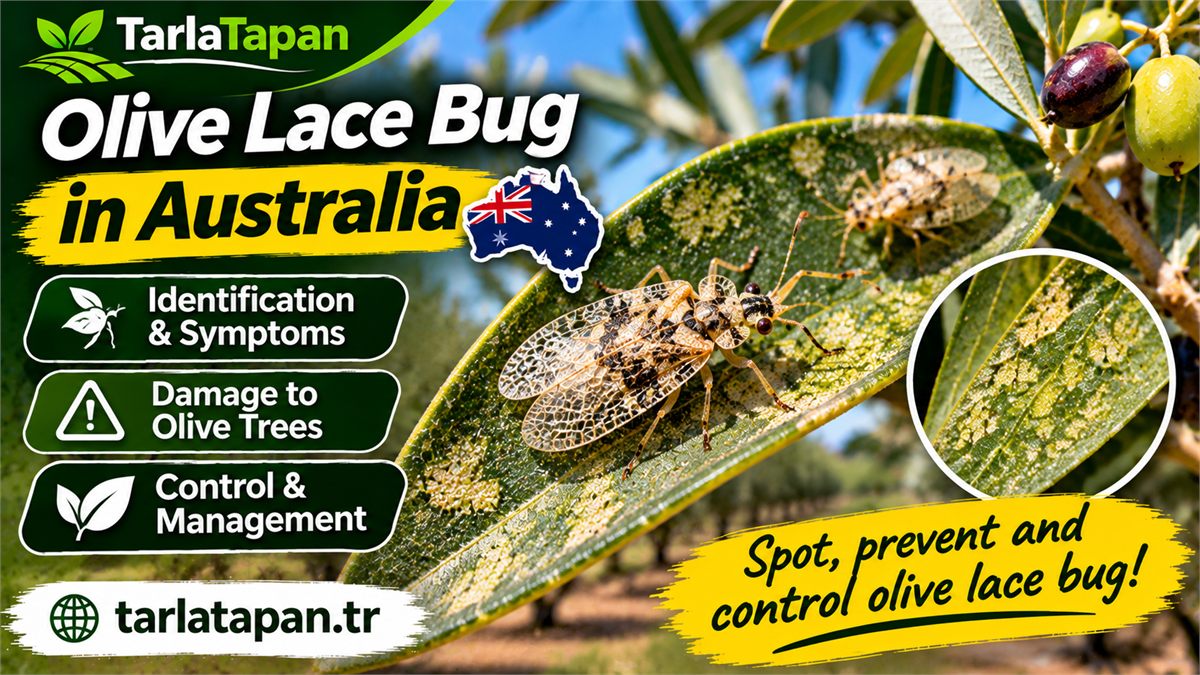
Adults are flat and tiny, up to about 2 mm long. Their wings are clear with a lace-like pattern, and the body is light brown with darker patches. Nymphs are darker and spiny. Both adults and nymphs feed together in groups on the underside of leaves.
Signs of lace bug damage on olives
The first sign is small yellow spots, about the size of a pinhead, on the top of the leaf. Turn the leaf over and you will often see the insects, their dark droppings and cast skins.
As feeding continues, leaves turn yellow and drop. Trees lose vigour, and the next crop can be smaller for one to two years. In bad cases a tree can lose most of its leaves. Heavy, repeated attacks can kill young or stressed trees.
Life cycle and generations
Eggs spend winter on the tree, inside the leaf tissue. They start hatching in late winter or spring. The bug can go through two to four generations in one season, so numbers can climb very fast once the weather warms.
This is why timing matters. If you wait until summer, you may be dealing with several overlapping generations at once.
When to check your trees
Start checking trees in early spring. Look at the underside of leaves on several branches, especially on the shaded inner canopy. The bug prefers shade and avoids direct light.
Once you have the bug under control, keep checking about every two weeks through the growing season. Pay extra attention to the edges of a grove and to trees that were infested before.
How to control olive lace bug
Control works best when it starts early in spring, soon after eggs hatch. Good spray coverage on the underside of leaves is essential, because that is where the bugs feed.
- Prune first. Opening the canopy lets in light and air. The bug dislikes light, and sprays reach the leaves more easily.
- Keep trees healthy. Stressed trees are more likely to be attacked. Water and feed trees well during dry periods.
- Spray again. Most sprays do not kill eggs inside the leaf. A second spray 10 to 14 days later catches newly hatched nymphs.
Chemical control
In Australia, some insecticides are allowed for this pest under minor-use permits issued by the APVMA. Permits set the product, rate, number of sprays and areas where they can be used. Always read the current label and permit before spraying. Rules can change and some permits apply only in certain states.
Organic and natural control
Green lacewings are natural predators of this pest, and growers have used them with success. Flowering groundcovers, hedgerows and bird habitat help other beneficial insects survive in the grove.
Pyrethrum and insecticidal soap are used against lace bugs overseas. If you use pyrethrum, spray in the late afternoon to protect bees. Avoid broad-spectrum sprays, which kill the beneficial insects that keep the bug in check.
Other olive pests to watch
This bug is not the only insect that attacks olives in Australia. Scale insects and fruit fly can also cause damage. Our main guide to olive tree pests covers these, and our article on growing olive trees in Australia explains general care.
Is olive lace bug a native pest?
Yes, olive lace bug (Froggattia olivinia) is a native Australian insect. It originally fed on native olive relatives such as Notelaea and moved onto cultivated olives after they were planted in Australia.
That is why it is a problem mainly in Australia and not in the Mediterranean. It is most common in New South Wales and Queensland, but it has also been found in other states. Because it is native, natural predators exist, but they rarely keep large outbreaks under control on their own.
Are lace bugs harmful?
Lace bugs are harmful to plants but not to people or pets. They do not bite or sting humans.
On olive trees, heavy infestations cause yellow mottling, leaf drop and weaker growth, and in severe cases dieback and much lower crops. A light infestation on a healthy tree is mainly cosmetic, but numbers can build up quickly over a warm season, so early action matters.
How to get rid of olive lace bug naturally
Natural control of olive lace bug is based on horticultural oils, insecticidal soap and strong water sprays aimed at the underside of the leaves, where the bugs live. Thorough coverage is more important than the product.
- Hose them off: A strong jet of water on the leaf undersides knocks off nymphs on small trees.
- Horticultural or pest oil: Smothers nymphs and adults. Do not spray in heat above about 30 °C.
- Insecticidal soap: Works on contact, so repeat after seven to ten days.
- Prune and thin: Remove heavily infested shoots and open up the canopy for better spray coverage.
- Encourage predators: Lacewings, ladybirds and spiders feed on lace bugs. Avoid broad-spectrum sprays that kill them.
Commercial growers may use registered insecticides when numbers are high. Always check the label and current registration for olives in your state.
When should you spray for olive lace bug?
The best time to spray is in spring, when the first nymphs of the season hatch, usually around October to November in eastern Australia. Young nymphs are easier to control than adults.
Check the undersides of leaves every couple of weeks from early spring. Repeat treatments after one to two weeks, because new nymphs keep hatching from eggs inside the leaves. A second check in late summer catches later generations.
More Australian Olive Guides
- Growing Olive Trees in Australia
- When to Harvest Olives in Australia
- Olive Trees in Pots in Australia
- How Many Kg of Olives per Tree
Frequently Asked Questions
What does olive lace bug look like?
Adult lace bugs are flat, light brown insects up to about 2 mm long with clear, lace-patterned wings. Nymphs are smaller, darker and spiny. Both feed in groups on the underside of olive leaves.
When should you spray for olive lace bug?
Spray in early spring, soon after eggs start hatching. Follow up 10 to 14 days later to catch nymphs that hatched after the first spray. Waiting until summer allows several generations to build up.
Can olive trees recover from lace bug?
Yes, most olive trees recover once the bug is controlled. New leaves grow back, but fruit yield may stay lower for one to two years. Young or stressed trees with repeated heavy attacks may not recover.
Is olive lace bug only found in Australia?
Yes, lace bug is a native Australian insect. It has not been found in other olive-growing regions of the world. This is why overseas olive guides rarely mention it.
What kills olive lace bug naturally?
Green lacewings are the best-known natural predator of lace bug. Pyrethrum and insecticidal soap sprays are natural options used against lace bugs. Keeping trees healthy and pruning to open the canopy also reduces attacks.
TarlaTapan guides focus on practical, field-tested growing advice. Corrections and suggestions are welcome at info@tarlatapan.tr.