How Many Kg of Olives Does One Tree Produce? Yield in Australia
How many kg of olives does one tree produce? Yield by tree age, size of a 7-year-old tree, olive oil per tonne, value of mature trees and bigger crops.
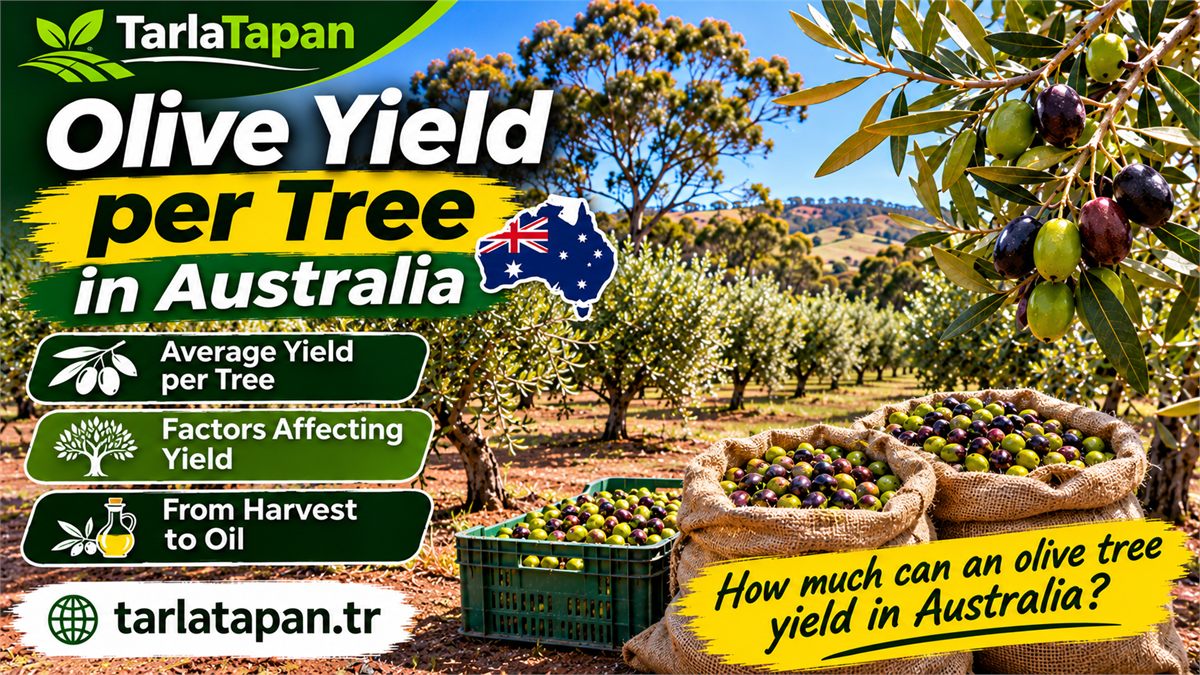
How Many Kg of Olives Does One Tree Produce? How many kg of olives per tree you get depends on the tree's age, variety, water and the year in the bearing cycle. There is no single official figure for Australia. Young trees give only a few kilos, while large mature trees in good years can give many times more. This guide explains what affects yield and how fruit turns into oil.
How many olives does one tree produce?
A single olive tree can produce anywhere from a few kilos to many tens of kilos of fruit, depending on age, size and care. Australia does not publish an official per-tree yield. Growers instead track yield per hectare, because tree spacing differs a lot between groves.
Some gardening sites quote very high figures, such as 180 kg per tree. These numbers usually describe very old, large trees under ideal conditions. A typical backyard tree will give far less.
Olive yield by tree age
Olive trees start bearing three to five years after planting. The first crops are small. Yield rises each year as the canopy grows, and trees reach full production after several more years.
- Years 1–3: usually no fruit, or only a handful.
- Years 3–5: first small crops.
- Mature trees: steady crops that depend mostly on water, nutrition and pruning.
Why olive yield changes every year
Olives crop in a two-year cycle called alternate bearing. A heavy "on" year is often followed by a light "off" year. Australian industry reports regularly describe whole seasons as on years or off years.
You can reduce the swing. Prune every year to keep new fruiting wood coming. Water and feed trees well, especially in a heavy crop year. In very heavy years, some growers thin fruit so the tree has energy left for the next season.
Olive yield per hectare in Australia
Yield per hectare varies widely between groves. Industry benchmarking found that many Australian growers earn too little per hectare, mainly because of low yields. Some growers spend little or nothing on water, fertiliser and pest control, and their yields stay low.
Well-managed, irrigated groves give much higher yields than dryland or neglected groves. Water is the biggest single factor in most Australian olive regions, because summers are long and dry.
How much olive oil do you get from a tonne of olives?
In Australia, a tonne of olives gives roughly 150 to 180 litres of oil. This is an estimate based on producer figures. Cobram Estate, the country's largest producer, reported more than 80,000 tonnes of olives giving about 14.2 million litres of oil, which is close to 178 litres per tonne.
Oil yield depends on the variety, ripeness and water content of the fruit. Riper fruit usually gives more oil than early green fruit. Our guide on how to make olive oil at home shows the process.
How to get a bigger olive crop
- Water deeply in spring and summer, especially during flowering and fruit growth.
- Feed in early spring and late summer with a balanced fertiliser.
- Prune in winter to let light into the canopy.
- Control olive lace bug and other pests early. See our guide to olive lace bug in Australia.
- Plant a second variety nearby to improve pollination.
For harvest timing, read when to harvest olives in Australia, and for general care see growing olive trees in Australia.
How big is a 7 year old olive tree?
A seven-year-old olive tree in the ground is often around three to five metres tall, depending on variety, climate, water and pruning. A potted tree of the same age is usually much smaller.
At this age, most grafted or cutting-grown trees are bearing regular crops, but they have not yet reached their full yield. Vigorous varieties in warm, well-watered sites grow faster, while trees in dry, poor soil stay more compact.
How much is a 40 year old olive tree worth?
The value of a 40-year-old olive tree varies enormously, from almost nothing for a tree that cannot be moved to thousands of dollars for a well-shaped specimen sold for landscaping. Size, trunk character, health and the cost of digging and transport decide the price.
Mature olives are sought after for gardens and commercial landscapes because they give an instant established look. However, moving them requires machinery, root-ball preparation and careful aftercare, so the price for the buyer includes much more than the tree itself. In a working grove, an old tree is valued mainly by the crop it produces.
How many kg of olives make one litre of oil?
As a rough guide, around five to eight kilograms of olives are needed to make one litre of olive oil. The exact amount depends on variety, ripeness and the water content of the fruit.
Riper olives usually give more oil per kilo than early green ones. Olives picked after a dry season also tend to give a higher oil yield because they contain less water.
Why does my olive tree produce fewer olives every second year?
Olive trees naturally crop heavily one year and lightly the next. This is called alternate or biennial bearing and is common in all olive-growing regions.
A heavy crop uses up the tree's energy and limits the new shoots that carry next year's fruit. Regular, moderate pruning, steady watering in spring and summer and balanced feeding help even out the swings.
More Australian Olive Guides
- Growing Olive Trees in Australia
- Is Olive Farming Profitable in Australia?
- Olive Lace Bug in Australia
- When to Harvest Olives in Australia
Frequently Asked Questions
How many kg of olives does a mature tree produce?
A mature olive tree can produce from a few kilos to many tens of kilos of fruit, depending on size, variety and care. Australia has no official per-tree figure. Very old, large trees under ideal conditions can produce far more.
How many litres of oil from one olive tree?
At about 150 to 180 litres of oil per tonne of fruit, 10 kg of olives gives roughly 1.5 to 1.8 litres of oil. A small backyard tree may only give enough fruit for one or two litres.
How long does it take for an olive tree to produce fruit?
Most olive trees start producing three to five years after planting. Yields increase each year as the tree grows. Full production takes several more years.
Why did my olive tree have no fruit this year?
The most common reason is alternate bearing, where a heavy crop is followed by a light one. Frost at flowering, lack of water, heavy pruning and pests such as olive lace bug can also reduce fruit.
Do olive trees produce every year?
Olive trees can produce every year, but crops are often uneven. A heavy year is commonly followed by a light year. Good watering, feeding and yearly pruning help keep crops more even.
TarlaTapan guides focus on practical, field-tested growing advice. Corrections and suggestions are welcome at info@tarlatapan.tr.