Why Is My Lavender Dying? Causes, Revival and Fixes in Australia
Why is my lavender dying? Root rot, humidity, clay and old wood explained, how to revive lavender, if brown lavender is dead and if woody plants can be saved.
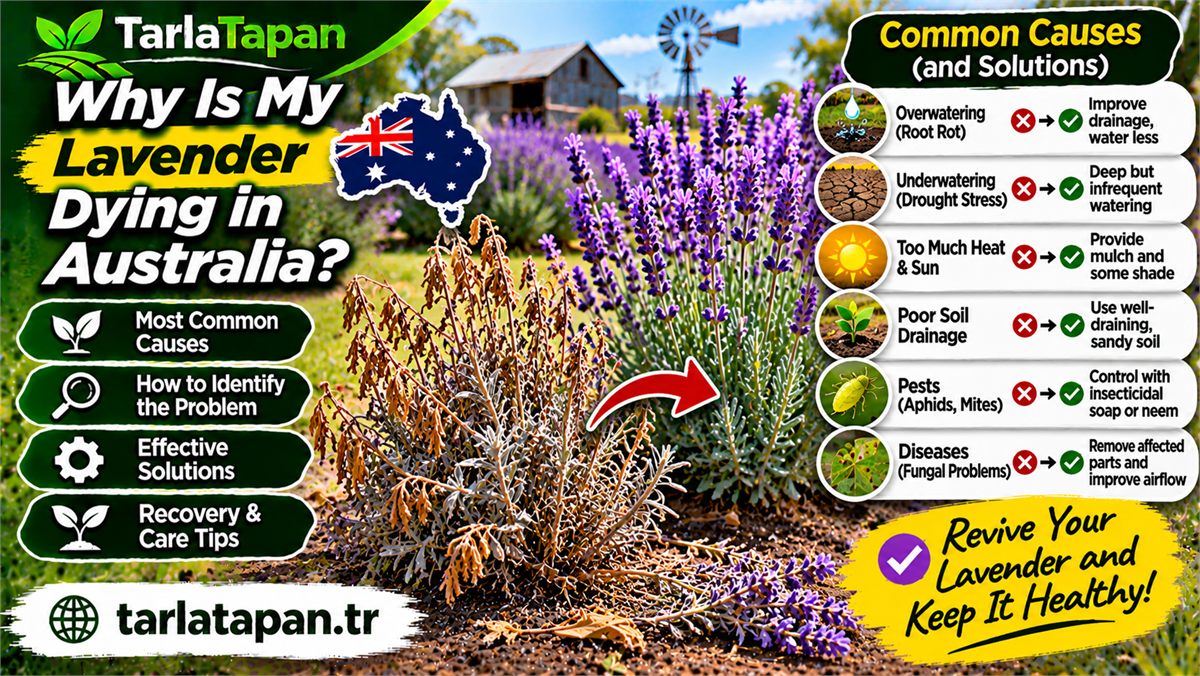
Why Is My Lavender Dying? Why is my lavender dying? In Australia, the most common answer is root rot caused by wet soil or humid summers. Lavender comes from dry, stony hillsides and hates having wet roots. Other causes include clay soil, overwatering, damp mulch, too much shade and pruning into old wood. This guide helps you find the cause and save the plant if possible.
Root rot from wet soil
Root rot is the number one lavender killer. It happens when roots sit in soil that stays wet. The plant wilts from the base upwards, stems turn soft and grey, and leaves yellow or brown. Pull gently on a stem: rotten roots are dark and mushy.
Fix: stop watering. If the plant is in a pot, repot it into fresh, free-draining mix and cut off black roots. In the ground, improve drainage or move the plant to a raised mound.
Humidity in summer
Humid summers in Sydney, Brisbane and northern NSW are hard on lavender, especially English lavender. Warm, wet air around the foliage invites fungal diseases that turn stems grey and kill sections of the plant.
Fix: choose French lavender or humidity-tolerant hybrids for humid areas. Space plants widely and prune them to keep air moving through the centre.
Heavy clay soil
Clay holds water for days after rain. Even if you water rarely, lavender in clay can drown in a wet spell.
Fix: plant lavender on a raised bed or mound of sandy, gravelly soil. Lavender prefers neutral to slightly alkaline soil, so a little garden lime can help in acidic clay.
Overwatering
Many people kill lavender with kindness. Established lavender in the ground rarely needs watering outside long, hot dry spells.
Fix: let the soil dry out completely between waterings. Check soil a finger's depth down before you water. In pots, water when the mix is dry, and empty saucers.
Mulch against the stems
Thick bark or compost mulch traps moisture around the base. The woody crown stays damp and rots.
Fix: pull mulch away from the stems. Use a thin layer of gravel or pebbles instead, which keeps the crown dry and reflects warmth.
Too much shade
Lavender needs full sun, at least six hours a day. In shade it grows thin and floppy, flowers poorly and stays damp.
Fix: move the plant to the sunniest, breeziest spot in the garden, ideally in autumn or spring.
Pruning into old wood
Lavender often fails to reshoot from bare, grey wood. Cutting too hard leaves dead patches or kills the plant.
Fix: only cut into leafy growth. Prune by about a third each year after flowering. See our guide on when to prune lavender in Australia.
Old age
Lavender is not a very long-lived shrub. After several years, plants become woody and open and stop flowering well, even with good care.
Fix: take cuttings from healthy plants in spring or autumn and replace old plants every few years.
Quick checklist
| Symptom | Likely cause |
|---|---|
| Wilting from the base, soft grey stems | Root rot, wet soil |
| Grey patches in humid weather | Fungal disease, poor airflow |
| Thin, floppy growth, few flowers | Too much shade |
| Dead patches after pruning | Cut into old wood |
| Bare, woody centre | Age, lack of pruning |
For choosing a type that suits your climate, see best lavender for Australian climates.
How do I revive my dying lavender plant?
To revive dying lavender, first find the cause: check whether the soil is wet, then improve drainage, stop overwatering and cut out dead stems back to healthy green growth. If the roots are rotten, the plant usually cannot be saved.
- Scratch a stem with your fingernail. Green underneath means it is alive, brown and dry means that part is dead.
- Lift a potted plant and check the roots. Healthy roots are pale and firm, rotten ones dark and soft.
- Move pots into full sun and into a free-draining mix with added grit.
- In the garden, rebuild the bed into a raised mound if water lies after rain.
- Take cuttings from any healthy shoots as a backup.
Is lavender dead if it turns brown?
Not always. Lavender that turns grey-brown in winter or after a dry spell can still be alive. If the stems are green under the bark and new leaves appear in spring, the plant will recover.
Brown stems that snap easily and stay dry inside are dead and should be cut out. If the whole plant browns quickly after rain or watering, root rot is the most likely cause.
Is my lavender dead or dormant?
Lavender is evergreen and does not lose all its leaves like a deciduous plant. In cold winters it grows very slowly and can look dull, but a dormant plant still has grey-green leaves and flexible stems.
Wait for spring before deciding. If no new growth has appeared by mid-spring, the plant or that section is most likely dead.
Can woody lavender be saved?
Woody lavender can sometimes be improved by gradual pruning, but very old, bare plants rarely become compact again. Lavender does not regrow well from old wood.
Cut back to just above any green shoots near the base and remove the oldest stems over two seasons. The more reliable fix is to take cuttings in spring or autumn and replace the old plant within a year.
More Australian Lavender Guides
- Growing Lavender in Australia
- When Does Lavender Flower in Australia?
- Lavender Farming in Australia
- Best Lavender for Australian Climates
Frequently Asked Questions
Why is my lavender turning grey?
Lavender turning grey and soft usually has root rot or a fungal disease caused by wet soil and humidity. Check the roots and improve drainage. Grey stems that snap dry may simply be old wood.
Can dying lavender be saved?
Sometimes. If only part of the plant is affected and the roots are firm, stop watering, improve drainage and remove dead stems. If the roots are black and mushy, the plant is unlikely to recover.
How often should lavender be watered in Australia?
Water new lavender once or twice a week for the first few weeks. After that, established plants in the ground rarely need water except in long dry spells. Potted lavender needs water when the mix dries out.
Why does my lavender die in summer?
In humid areas, lavender often dies in summer because heat plus humidity and wet soil cause root rot and fungal disease. In dry areas, it may be stressed by pots drying out completely.
Why is my lavender dying from the bottom up?
Lavender dying from the bottom up is a classic sign of root rot or crown rot. Wet soil or damp mulch around the base is the usual cause. Improve drainage and keep the crown dry.
TarlaTapan guides focus on practical, field-tested growing advice. Corrections and suggestions are welcome at info@tarlatapan.tr.