Is Lavender Farming Profitable in Australia? Industry, Oil and Farms
Is lavender farming profitable in Australia? Income streams, costs and risks, the grower association, best regions, lavender tourism and starting a farm.
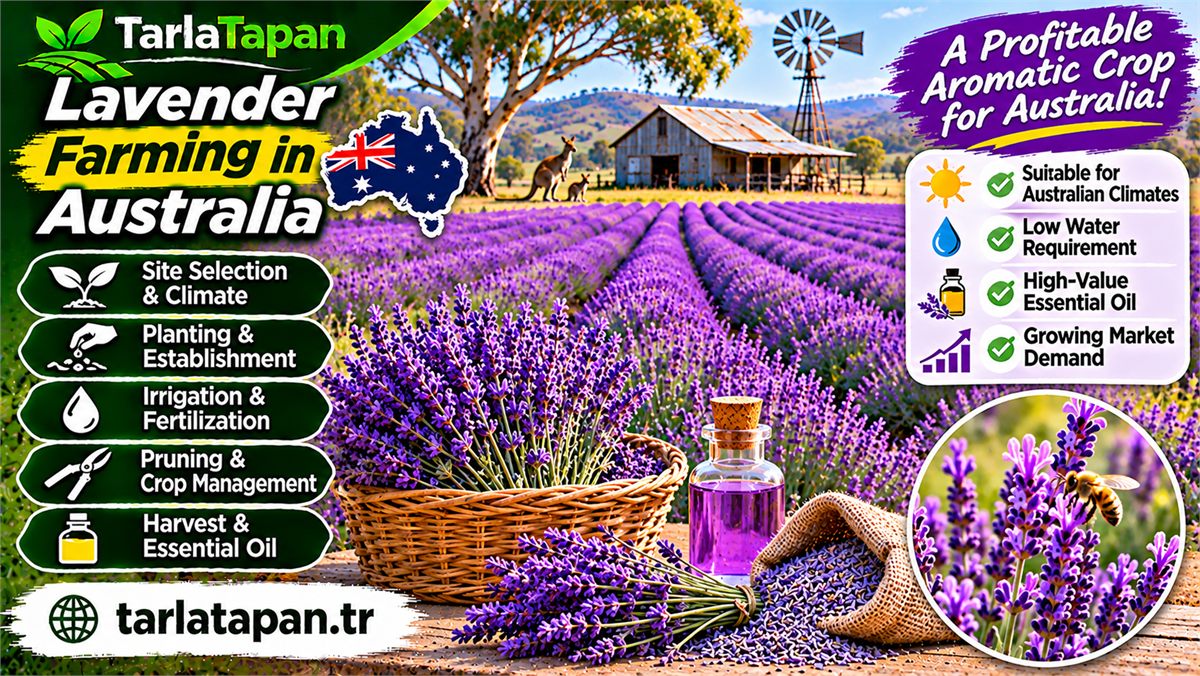
Is Lavender Farming Profitable in Australia? Lavender farming in Australia is a small but well-known industry. Lavender is grown commercially in six states for oil, dried flowers, products and tourism. Its most famous farm is Bridestowe Estate in north-east Tasmania, one of the world's largest plantings of English lavender. This guide covers the industry, how lavender is farmed and what to know before starting.
Where lavender is farmed in Australia
Lavender is grown commercially in six Australian states. Tasmania is the best-known region, but farms also operate in Victoria, New South Wales, South Australia, Western Australia and Queensland. Many farms are small family businesses that combine growing with a shop, café or open days.
The southern states suit lavender best because summers are dry. Humid summers raise the risk of root rot and fungal disease.
Bridestowe Estate, Tasmania
Bridestowe Estate near Nabowla in north-east Tasmania is the centre of Australian lavender farming. It was founded in 1922. A trial distillation in 1924 produced oil judged at least equal to good French oil.
The estate is often described as the largest commercial planting of Lavandula angustifolia in the world. Reports put its area at around 100 hectares, with hundreds of thousands of plants. A recent local report said it produces roughly a tonne of lavender oil and a tonne of dried flowers each year. In 1975, Bridestowe was reported to supply 25% of world demand for lavender oil.
English lavender vs lavandin for farming
Lavender farms grow two main crops. English lavender (Lavandula angustifolia) produces the finest, sweetest oil, valued in perfume and personal care. Lavandin (Lavandula x intermedia) grows larger and yields more oil per plant, but the oil is sharper and sells for less.
Many farms grow both: English lavender for premium oil and culinary buds, lavandin for volume and dried bunches.
How lavender is farmed
- Site: full sun, free-draining slopes and low summer humidity.
- Planting: rows of plants grown from cuttings, spaced to allow airflow and harvest machinery.
- Care: little water once established, weed control between rows and yearly pruning.
- Harvest: in summer, when flowers are at the right stage for oil or drying.
- Distillation: steam passes through the flowers, and oil separates from the water.
Plants take a couple of years to reach good production and can stay productive for many years with good pruning.
Lavender tourism
For many Australian lavender farms, tourism is as important as oil. Visitors come in December and January to see the fields in bloom, take photos and buy lavender products. Cafés, gift shops, lavender ice cream and workshops add income.
Bridestowe is one of Tasmania's well-known tourist attractions, and lavender farms in other states also draw summer crowds.
Starting a lavender farm
Lavender looks easy, but commercial success depends on more than growing plants. Key points to consider:
- Choose English lavender or lavandin varieties that suit your climate and market.
- Test your site's drainage before planting large areas.
- Plan how you will sell: oil, dried flowers, products, tourism or a mix.
- Budget for a still or contract distillation.
- Expect a few years before full production.
The industry has released a Strategic Australian Lavender Industry RD&E Plan for 2023–2028, which aims to lift production and quality.
For growing basics, see growing lavender in Australia and best lavender for Australian climates.
Is lavender farming profitable in Australia?
Lavender farming in Australia can be profitable, but most successful farms earn their income from tourism, cafés and value-added products rather than from selling raw flowers or oil alone. Bulk lavender oil competes with cheaper imports.
Typical income streams are farm visits, picking days, a shop with soaps, creams and dried lavender, events and weddings, and sometimes accommodation. A farm close to a city or a tourist region has a clear advantage. The plants need three to four years to reach full production, so the first years usually bring little income.
Main costs and risks of a lavender farm
The main costs are plants, soil preparation, irrigation, weed control, harvesting labour and, for oil, a distillation unit. Products, packaging and a shop or café add further investment.
- Weather: wet summers, humidity and hail can damage crops and spread root disease.
- Weeds: young rows need a lot of weed control before plants close up.
- Labour: harvesting and making products are time-consuming.
- Market: income depends strongly on visitor numbers and marketing.
The Australian Lavender Growers Association
The Australian Lavender Growers Association (TALGA) is the national body for lavender growers. It shares information on varieties, growing, oil quality and markets.
New growers can learn from established farms through the association, field days and regional groups. It is a good first step before planting, because experienced growers can tell you which varieties and products work in your area.
Is lavender easy to grow in Australia?
Lavender is easy to grow in much of southern Australia, where summers are dry and winters are cool. It is harder in humid, subtropical and tropical regions, where wet summers cause root rot.
For a farm, a trial planting of different varieties for one or two years shows what grows well on your site before you invest in large areas.
Check soil drainage, water availability and frost and hail history first. Talk to the local council about zoning if you plan a shop, café or events on the farm. A small market garden or a few rows beside an existing business is a lower-risk way to start.
More Australian Lavender Guides
- Growing Lavender in Australia
- Best Lavender for Australian Climates
- When to Prune Lavender in Australia
- Why Is My Lavender Dying?
Frequently Asked Questions
Where is the biggest lavender farm in Australia?
Bridestowe Estate in north-east Tasmania is the best-known and largest lavender farm in Australia. It is often described as the largest commercial planting of English lavender in the world.
Can you make money from lavender farming in Australia?
Some farms make money, often by combining oil and dried flowers with tourism, a shop or products. Oil alone is a competitive market. Planning sales before planting is important.
Which states grow lavender commercially?
Lavender is grown commercially in six Australian states. Tasmania is the best-known region, with farms also in Victoria, New South Wales, South Australia, Western Australia and Queensland.
What lavender is used for oil in Australia?
Australian lavender oil comes mainly from English lavender (Lavandula angustifolia) for fine oil and from lavandin for higher yields. English lavender oil is valued for its sweet scent.
When is lavender harvested in Australia?
Lavender is harvested in summer in Australia, mainly December and January in the southern states. Timing depends on whether the crop is for oil or for dried flowers.
TarlaTapan guides focus on practical, field-tested growing advice. Corrections and suggestions are welcome at info@tarlatapan.tr.