Where Do Walnuts Grow in Australia? Regions, Season and Industry
Where do walnuts grow in Australia? Main regions in the Riverina and Tasmania, harvest season, if walnuts grow in your area and which countries lead production.
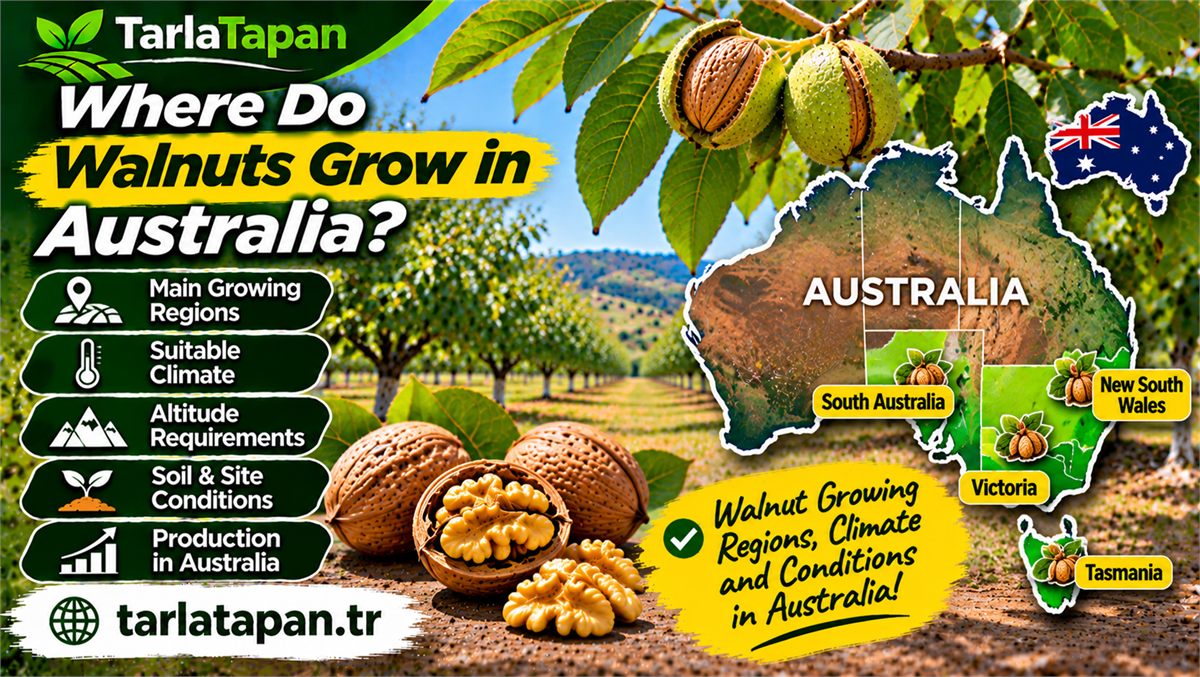
Where Do Walnuts Grow in Australia? Where do walnuts grow in Australia? Most commercial walnuts come from three areas: the Riverina in New South Wales, Tasmania and northern Victoria. The Riverina, near Leeton and Griffith, grows the largest share. Smaller orchards are found in South Australia and Western Australia. This guide covers each region and the size of the industry.
Main walnut growing regions in Australia
Large walnut orchards are located in the Riverina of New South Wales, the Goulburn Valley of Victoria and Tasmania.
| Region | State | Notes |
|---|---|---|
| Riverina (Leeton, Griffith) | New South Wales | Largest walnut region |
| Southern Tasmania | Tasmania | About 22% of national production |
| Goulburn Valley, Swan Hill, Kerang | Victoria | Smaller share of production |
| Adelaide Hills, Riverland | South Australia | Small plantings |
| South-west | Western Australia | Small plantings |
The Riverina, New South Wales
The Riverina is the heart of the Australian walnut industry. Large irrigated orchards near Leeton and Griffith produce the biggest share of the national crop. The region has cold winters, hot dry summers and irrigation water from the Murrumbidgee system. Walnuts here mature earlier than in Tasmania.
Tasmania
Tasmania produces about 22% of Australia's walnuts. Orchards are mainly in the south of the state. One example grows Franquette and Chandler on deep river soils near Richmond. The cool climate means nuts mature slowly, and harvest usually falls in March and April, sometimes into early May.
Victoria and South Australia
In Victoria, walnuts grow in the Goulburn Valley near Shepparton and along the Murray near Swan Hill and Kerang. Victoria's share of production is small. South Australia has small plantings in the Adelaide Hills and the Riverland.
How big is the Australian walnut industry?
The walnut industry is much smaller than the almond industry. An NSW DPI report put total walnut plantings at about 3,000 hectares, though this is an older figure. The industry produced about 12,800 tonnes of in-shell walnuts in 2019–20.
Australian walnuts are harvested in autumn, at the opposite time of year to the northern hemisphere crop.
Why these regions suit walnuts
Walnuts need cold winters for chill, a spring without late frosts and a long, warm growing season with plenty of water. The Riverina and northern Victoria offer heat and irrigation. Tasmania offers cool conditions and good rainfall, which suits late-leafing varieties.
Humid coastal areas and the tropics are a poor match. Wet springs spread walnut blight, and many warm areas do not get enough winter chill.
Walnut calendar in Australia
- June–August: trees are dormant; pruning and planting bare-root trees.
- September–October: budburst and flowering; the main walnut blight risk period.
- November–February: nut growth and kernel fill; irrigation is critical.
- March–April (to early May in Tasmania): harvest.
For more, read when to harvest walnuts in Australia, best walnut varieties for Australia and our main guide to growing walnut trees in Australia.
Challenges for Australian walnut growers
The main challenges are walnut blight in wet springs, water supply in dry years and heat during kernel fill. Spring rain in Tasmania and the Riverina can spread blight quickly. Copper sprays are becoming less effective, and researchers are testing new controls. NSW government climate work also expects irrigation needs to rise and winter chill to fall in some regions, which may favour low-chill varieties in future.
Is it possible to grow walnut trees anywhere in Australia?
Walnut trees can be grown in many parts of southern Australia, but they crop well only where winters are cold enough and summers warm without extreme humidity. They are not suited to tropical and most subtropical regions.
Good backyard areas include the tablelands of New South Wales, much of Victoria, Tasmania, the Adelaide Hills and cooler parts of Western Australia. In hot inland areas they need reliable irrigation, and in very wet areas walnut blight becomes a bigger problem.
Which countries produce the most walnuts?
The largest walnut producers in the world are China and the United States, mainly California, followed by countries such as Chile, Iran, Turkey and Ukraine. Australia is a small producer by world standards.
Quality depends on variety, climate, harvest care and freshness rather than on country alone. Australian walnuts have the advantage of being harvested in autumn, from about March to May, which is the opposite season to the Northern Hemisphere. Australian consumers can therefore buy freshly harvested local walnuts when imported nuts are already months old.
When are Australian walnuts in season?
Fresh Australian walnuts are harvested from late summer to autumn, usually around March to May. New-season walnuts reach shops in the following weeks.
Look for packs labelled with the current season or Australian grown. Fresh walnuts have pale, plump kernels and a sweet, mild taste without bitterness.
Why do walnuts grow well in the Riverina and Tasmania?
The Riverina and Tasmania suit walnuts because both have cold winters for dormancy and warm, dry summers for ripening, but they differ in water supply. The Riverina has large irrigation schemes, while Tasmania has higher rainfall and a milder summer.
In the Riverina, deep soils and reliable irrigation allow large, mechanised orchards with high yields. In Tasmania, the cooler climate gives slower ripening and fewer heat problems, which suits smaller orchards and premium markets. Both regions have relatively low summer humidity, which keeps walnut blight easier to manage than in wetter coastal areas.
Victoria and South Australia also have walnut orchards in cooler inland and hills areas, often on a smaller scale.
More Australian Walnut Guides
- Growing Walnut Trees in Australia
- When to Harvest Walnuts in Australia
- Walnut Blight in Australia
- How Much Water Does a Walnut Tree Need
Frequently Asked Questions
Which state grows the most walnuts in Australia?
New South Wales grows the most walnuts, mainly in the Riverina near Leeton and Griffith. Tasmania is the second key state, producing about 22% of the national crop.
Do walnuts grow in Tasmania?
Yes, walnuts grow well in Tasmania, mainly in the south of the state. The cool climate slows ripening, so harvest runs from March into April and sometimes early May.
How many walnuts does Australia produce?
Australia produced about 12,800 tonnes of in-shell walnuts in 2019–20. Production changes from year to year with weather and new orchards coming into bearing.
Can walnuts grow in Queensland?
Walnuts struggle in most of Queensland because winters are too mild and springs can be humid. They need cold winters for chill. Some cooler inland highland areas may suit low-chill varieties.
When are Australian walnuts in season?
Australian walnuts are harvested in autumn, from March to May, and the new-season crop reaches shops from autumn onwards. This is the opposite of the northern hemisphere, where walnuts are picked in September and October.
TarlaTapan guides focus on practical, field-tested growing advice. Corrections and suggestions are welcome at info@tarlatapan.tr.