How Do You Grow Walnut Trees in Australia? Climate, Varieties and Care
How do you grow walnut trees in Australia? Climate, varieties, planting, water, blight, time to fruit, growing from a walnut and if a walnut suits your yard.
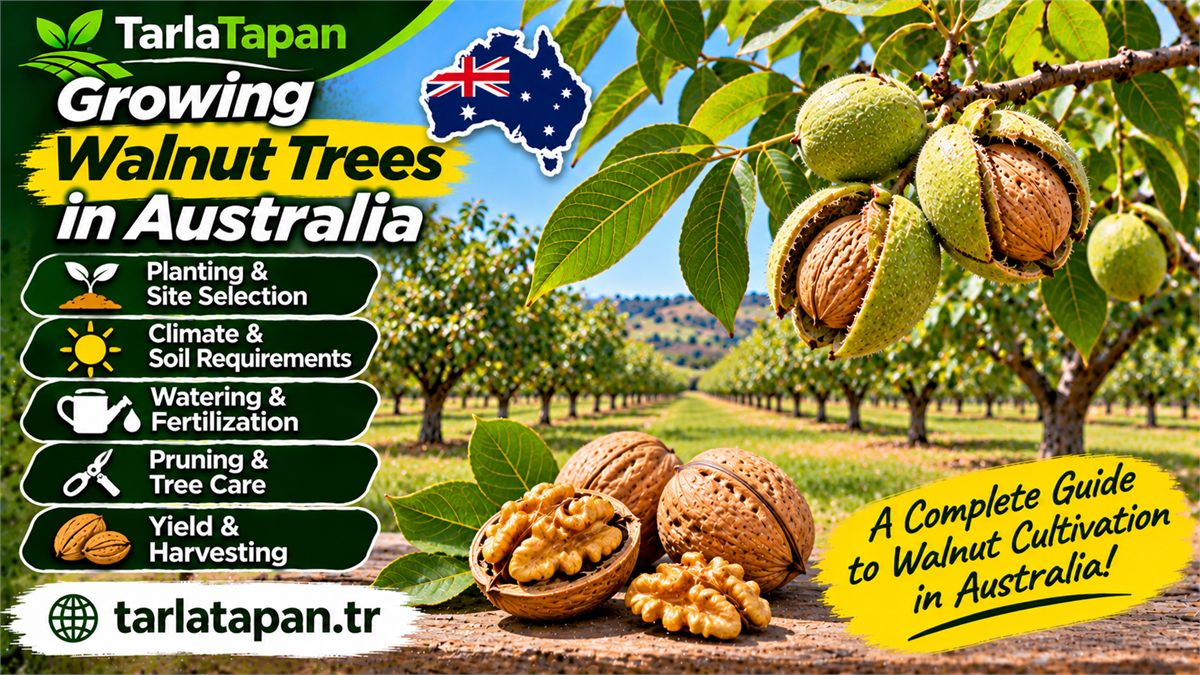
How Do You Grow Walnut Trees in Australia? Growing walnut trees in Australia works best in areas with cold winters, a frost-free spring and warm, dry summers. Commercial walnuts grow mainly in the Riverina of New South Wales, Tasmania and northern Victoria. In backyards, walnuts suit most of southern Australia if there is room for a large tree. This guide covers regions, varieties, planting, care, disease and harvest.
Contents
- Where do walnuts grow in Australia?
- Climate walnut trees need
- Best walnut varieties for Australia
- Planting a walnut tree
- Watering walnut trees
- Feeding and pruning
- Walnut blight and other problems
- How long until a walnut tree produces?
- When are walnuts harvested in Australia?
Where do walnuts grow in Australia?
Australia's large walnut orchards are in the Riverina of New South Wales, Tasmania and the Goulburn Valley of Victoria. The Riverina, near Leeton and Griffith, grows the largest share of the crop. Tasmania is the second key region, with orchards in the south of the state.
Smaller plantings are found in northern Victoria near Swan Hill and Kerang, in the Adelaide Hills and Riverland of South Australia, and in Western Australia. The industry produced about 12,800 tonnes of in-shell walnuts in 2019–20. Read more in our guide to where walnuts grow in Australia.
Climate walnut trees need
Walnuts need a cold winter, a spring without late frosts and a long, warm growing season. Winter chill lets the tree break bud and flower evenly. Depending on the variety, walnuts need roughly 400 to 1,500 hours of winter chill below 7°C. Many popular varieties sit in the middle of this range.
Late spring frost is the main climate risk. New shoots and flowers are easily damaged. Late-leafing varieties such as Chandler help avoid frost because they come into leaf later.
Summer heat and dry air suit walnuts if they have water. Very hot spells can scorch nuts on exposed branches. NSW government climate work expects chill to decline in some walnut regions, so low-chill varieties may become more useful.
Best walnut varieties for Australia
Chandler and Howard are the main commercial walnut varieties in Australia. Older orchards were dominated by Franquette, which made up most trees planted until the late 1980s. Other varieties found here include Hartley, Vina, Serr and Lara.
| Variety | Notes |
|---|---|
| Chandler | Late leafing, high-quality light kernels, large tree |
| Howard | Compact, productive, common in orchards |
| Franquette | Very late leafing, older variety, good in frosty areas |
| Serr | Small to medium tree, suits backyards |
Walnuts are partly self-fertile. One tree can bear on its own, but two varieties planted together usually crop better. See our full guide to the best walnut varieties for Australia.
Planting a walnut tree
Plant walnut trees in winter as bare-root trees, or from autumn to spring as potted trees. Walnuts need deep, well-drained soil. Their roots go deep, so shallow or waterlogged soil limits growth.
Give the tree space. Standard walnut trees grow very large; some can reach 25 metres. Chandler is listed at about 10 to 12 metres tall and 8 to 10 metres wide. For smaller gardens, choose a compact variety such as Serr.
Plant at the same depth the tree grew in the nursery. Water in well, mulch the root zone and keep mulch off the trunk. Protect the young trunk from sunburn with white tree paint or a guard in hot inland areas.
Watering walnut trees
Walnuts need plenty of water in summer. A NSW Department of Primary Industries review set a minimum need of about 738 mm of water over the growing season, from October to April. That equals roughly 7.4 megalitres per hectare, and the review says this is probably an underestimate.
In a backyard, water young trees deeply once or twice a week in warm weather. Mature trees need deep watering through summer, especially while nuts are filling in January and February. Read our walnut tree watering guide for details.
Feeding and pruning
Feed walnut trees in late winter or early spring with a balanced fertiliser, and again lightly in early summer if growth is weak. Mulch with compost each spring to feed the soil.
Walnuts need little pruning once their shape is set. Train young trees to a strong central leader or a few well-spaced main branches. On mature trees, remove dead, broken and crossing branches. Prune in dry weather in late winter, as wounds can bleed sap in spring.
Walnut blight and other problems
Walnut blight is the most important walnut disease in Australia. It is a bacterial disease that causes black spots on leaves, shoots and young nuts. Infected nuts may drop or have stained kernels. Wet weather in spring spreads it.
Growers mainly use copper-based sprays from budburst, repeated every 7 to 14 days or before rain. Starting at budburst matters; a recent trial at Leeton found that late-starting programs gave little benefit. See our guide to walnut blight in Australia.
Other problems include codling moth, sunburn on exposed nuts and birds such as cockatoos taking nuts before harvest.
How long until a walnut tree produces?
Grafted walnut trees usually start bearing three to five years after planting. Trees grown from seed take much longer, often 10 to 15 years, and their nuts may differ from the parent. Buy a grafted tree of a named variety for faster and more reliable crops.
Crops increase each year as the tree grows. A healthy mature tree can bear for many decades.
When are walnuts harvested in Australia?
Walnuts in Australia are harvested in autumn, usually March and April. The Riverina tends to finish earlier than Tasmania, where cool weather slows ripening and harvest can run into early May.
Walnuts are ready when the green hull splits and the nuts fall or shake off easily. Collect them quickly, remove the hulls and dry the nuts. Our guide on when to harvest walnuts in Australia explains each step.
Growing walnuts in a backyard
A walnut tree is a long-term backyard tree. It gives shade in summer, drops its leaves in winter and produces nuts for decades. Plant it well away from the house, pipes and vegetable beds. Walnut roots release a natural compound called juglone, which can harm tomatoes and some other plants growing close by.
Choose a grafted, compact variety if space is limited. Net young trees or pick nuts as soon as they drop to beat birds and rats.
Storing and using your walnuts
Once dried, walnuts in the shell keep for several months in a cool, dry, airy place. Shelled kernels go rancid faster because their oils are exposed to air. Keep kernels in a sealed container in the fridge for a few months, or in the freezer for longer.
Fresh-season Australian walnuts reach the table in autumn, when northern hemisphere stock is months old. Keep stored nuts away from strong smells such as onions, because kernels can pick up odours. Use them raw, toasted, in baking or in salads.
Common walnut problems in Australia
- No nuts on a young tree: the tree may be too young, or it may be a seedling that takes 10 years or more to bear.
- Nuts dropping in spring: often walnut blight, frost at flowering or poor pollination.
- Black, sunken nuts in summer: walnut blight or sunburn on exposed branches.
- Hulls sticking to the shell: heat or water stress late in summer.
- Shrivelled, dark kernels: water stress during kernel fill, or nuts left too long on wet ground after they fall.
- Holes in nuts: codling moth larvae feeding inside the nut.
Most of these come back to four things: a variety that suits your climate, deep summer watering, early blight control and quick collection at harvest.
Walnut tree calendar for Australia
- Winter (June–August): plant bare-root trees, prune, clean up old nuts and leaves.
- Early spring (September–October): budburst and flowering; start copper sprays for blight; watch for late frost.
- Late spring and summer (November–February): nuts grow and fill; water deeply and regularly.
- Autumn (March–May): harvest, hull and dry the nuts.
Following this calendar keeps a backyard tree healthy and gives the best chance of clean, light kernels.
Is it good to have a walnut tree in your yard?
A walnut tree is a good choice for a large yard with deep soil and cool winters, but it is too big for most suburban blocks. Mature trees can reach 15 metres or more in height and spread.
Walnuts give deep summer shade and a valuable crop, and their leaves have a strong smell that many people find pleasant. On the other hand, their roots and fallen leaves release juglone, a natural compound that slows the growth of many plants beneath them. Falling nuts and hulls also stain paving, so plant away from driveways and outdoor living areas.
Can you grow a walnut tree from a store-bought walnut?
Store-bought walnuts rarely grow, because most are dried at high temperatures or pasteurised, which kills the seed. Fresh, in-shell walnuts from a local grower or your own tree have a much better chance.
Plant fresh nuts in autumn about five centimetres deep in a deep pot or directly in the ground, so they get the winter chill they need to germinate. Protect them from rats, mice and cockatoos with wire mesh. A seedling tree will not be identical to its parent and can take ten years or more to crop, so grafted trees are the better choice for nuts.
Can you eat walnuts straight from the tree?
Yes, you can eat walnuts straight from the tree once the green outer hull has split and been removed. Fresh, undried walnuts are called wet walnuts and have a soft, creamy, milder kernel than dried ones.
Peel off the thin, slightly bitter skin around the kernel if you prefer a sweeter taste. Wet walnuts only keep for a few days in the fridge. For storage, they must be dried first, otherwise they go mouldy. Wear gloves when handling the green hulls, as their juice stains skin and clothes dark brown for days.
All Australian Walnut Guides
- When to Harvest Walnuts in Australia
- Walnut Blight in Australia
- How Much Water Does a Walnut Tree Need
- Best Walnut Varieties for Australia
- Where Do Walnuts Grow in Australia?
Frequently Asked Questions
Can walnut trees grow in Australia?
Yes, walnut trees grow well in many parts of Australia. Commercial orchards are in the Riverina, Tasmania and northern Victoria. Backyard trees suit most of southern Australia where winters are cold enough.
How long does it take a walnut tree to produce nuts in Australia?
Grafted walnut trees usually produce nuts three to five years after planting. Seedling trees can take 10 to 15 years. Crops increase as the tree matures.
When do you plant walnut trees in Australia?
Plant bare-root walnut trees in winter, usually June to August. Potted trees can be planted from autumn to spring. Avoid planting in very hot weather.
Do you need two walnut trees to get nuts?
No, walnut trees are partly self-fertile, so one tree can produce nuts. Planting two different varieties usually improves pollination and gives a bigger crop.
How big do walnut trees get in Australia?
Standard walnut trees grow very large, often 10 metres or more, and some reach 25 metres. Chandler is listed at about 10 to 12 metres tall. Compact varieties such as Serr suit smaller gardens.
TarlaTapan guides focus on practical, field-tested growing advice. Corrections and suggestions are welcome at info@tarlatapan.tr.