How Long Do Joeys Stay in a Kangaroo's Pouch? Birth, Pouch Life and Growth
How long do joeys stay in a kangaroo's pouch? Birth, pouch life, why the pouch matters, what to do if you find a joey and how carers make pouches.
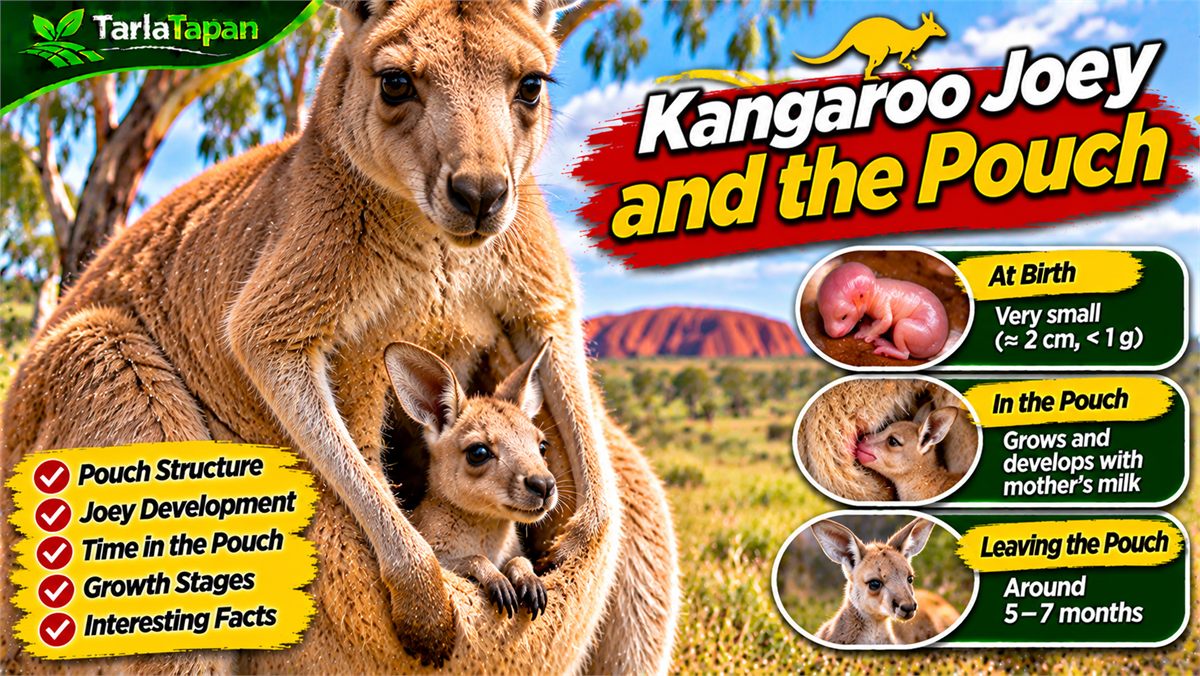
How Long Do Joeys Stay in a Kangaroo's Pouch? A kangaroo joey is born after a very short pregnancy and finishes growing in its mother's pouch. A newborn joey is tiny, blind and hairless, about the size of a jellybean. It spends many months in the pouch before it hops out for good. This guide explains each stage of a joey's life and the remarkable way kangaroos can pause a pregnancy.
How long are kangaroos pregnant?
Kangaroos have a very short pregnancy. San Diego Zoo puts it at about 33 days for the red kangaroo, which is long for a marsupial. Western grey kangaroos average about 31 days. Most development happens later, in the pouch.
Birth and the crawl to the pouch
At birth, a joey is only a few centimetres long and weighs less than a gram. Its back legs are barely formed, but its front legs are strong. It climbs through its mother's fur to the pouch on its own, guided by smell and touch. The mother licks a path in her fur but does not carry it.
Inside the pouch, the joey attaches firmly to one of four teats. The teat swells in its mouth, holding it in place.
Life in the pouch
| Stage | What happens |
|---|---|
| First weeks | Joey stays attached to the teat, growing fur, eyes and legs |
| Around 5–6 months | Joey first pokes its head out of the pouch |
| Several months | Joey starts leaving the pouch for short trips, hopping back in when scared |
| Around 8–11 months | Joey leaves the pouch for good, depending on species |
| Up to about a year or more | Young-at-foot joey still drinks milk by putting its head into the pouch |
The red kangaroo joey stays attached to the teat for about 70 days. Timing varies between species and individuals.
Two joeys and two kinds of milk
A female kangaroo can feed two joeys of different ages at the same time. A young joey in the pouch drinks from one teat, while an older joey at foot drinks from another. Each teat produces milk suited to its joey's age, with different amounts of fat and protein.
Embryonic diapause: the paused pregnancy
Female kangaroos often mate again soon after giving birth. The new embryo grows for a short time, then stops at an early stage while the pouch is occupied. This is called embryonic diapause.
When the older joey leaves the pouch or stops suckling as much, hormones change and the embryo starts developing again. If the pouch young dies, the paused embryo can also resume. This means a female kangaroo can have an embryo, a pouch joey and a young-at-foot all at once.
When does a joey become independent?
After leaving the pouch, a joey stays close to its mother and keeps drinking milk for several more months. Young males eventually leave the family group, while young females often stay in the same area as their mothers.
Orphaned joeys
Many joeys are orphaned when their mothers are hit by cars. If you find a dead kangaroo on the road, it is worth checking the pouch, if safe, and calling a local wildlife rescue group. Do not try to raise a joey yourself; they need special milk and care.
For more about kangaroos, read our main kangaroo facts guide and what kangaroos eat.
Why do kangaroos keep joeys in their pouch?
Kangaroos keep joeys in their pouch because the baby is born tiny and undeveloped and could not survive outside. The pouch works like an external womb that keeps the joey warm, safe and close to milk.
Inside, the joey is attached to a teat for the first months and grows its fur, eyes and limbs. The mother can tighten the pouch muscles to stop the joey falling out while she hops. She also cleans the pouch regularly by licking it.
What to do if you find a joey in a pouch
If you find a dead kangaroo on the road, carefully check the pouch for a joey and call your local wildlife rescue service straight away. In New South Wales this is WIRES, other states have their own rescue groups and hotlines.
- Only stop where it is safe to do so, and switch on your hazard lights.
- Do not pull a tiny joey off the teat, as this can damage its mouth. Wait for a trained rescuer, who may cut the teat.
- Keep a removed joey warm, wrapped in a soft cloth or jumper and held against your body.
- Keep it dark and quiet, and handle it as little as possible.
- Never give cow's milk. It can cause serious illness and death in kangaroos.
Many joeys survive their mother's death if they are found quickly. Note the exact location for the rescue service.
How do wildlife carers make pouches for joeys?
Wildlife carers use artificial pouches made from an outer bag of fleece or wool and soft cotton liners inside. The liner is changed often to keep the joey clean and dry.
Pouches must have no loose threads or rough seams, because tiny claws can get caught. Natural fibres are preferred because they breathe. Community groups regularly ask volunteers to sew pouches and liners, often following patterns provided by wildlife organisations.
Can a joey return to the pouch after leaving?
Yes, a young joey keeps returning to the pouch for weeks after it first leaves. It jumps back in head first when it is frightened, cold or hungry, and turns around inside.
Eventually it becomes too big to fit, but it still drinks milk by putting its head into the pouch. This stage is called young at foot. By then the mother may already carry a new, tiny joey inside.
More Kangaroo Guides
Frequently Asked Questions
How big is a newborn kangaroo joey?
A newborn joey is tiny, about the size of a jellybean, and weighs less than a gram. It is blind and hairless but can crawl to the pouch on its own.
How long does a joey stay in the pouch?
A joey stays in the pouch for around 8 to 11 months, depending on the species. It then keeps drinking milk at foot for several more months.
Can a kangaroo have two babies at once?
Yes. A female can have a joey in the pouch, an older joey at foot and a paused embryo at the same time. She produces different milk for each joey.
What is embryonic diapause in kangaroos?
Embryonic diapause is a pause in the development of an embryo. The embryo stays dormant while the pouch is occupied and starts growing again when the older joey leaves or stops suckling.
What should I do if I find a joey?
Keep the joey warm and quiet and call a local wildlife rescue group straight away. Do not feed it cow's milk or try to raise it yourself.
TarlaTapan guides focus on practical, field-tested growing advice. Corrections and suggestions are welcome at info@tarlatapan.tr.