Which Almond Variety Is Best for Australia? Orchard and Backyard Choices
Which almond variety is best for Australia? Nonpareil and pollinators, self-fertile almonds for backyards, rootstocks, years to first crop and climate choice.
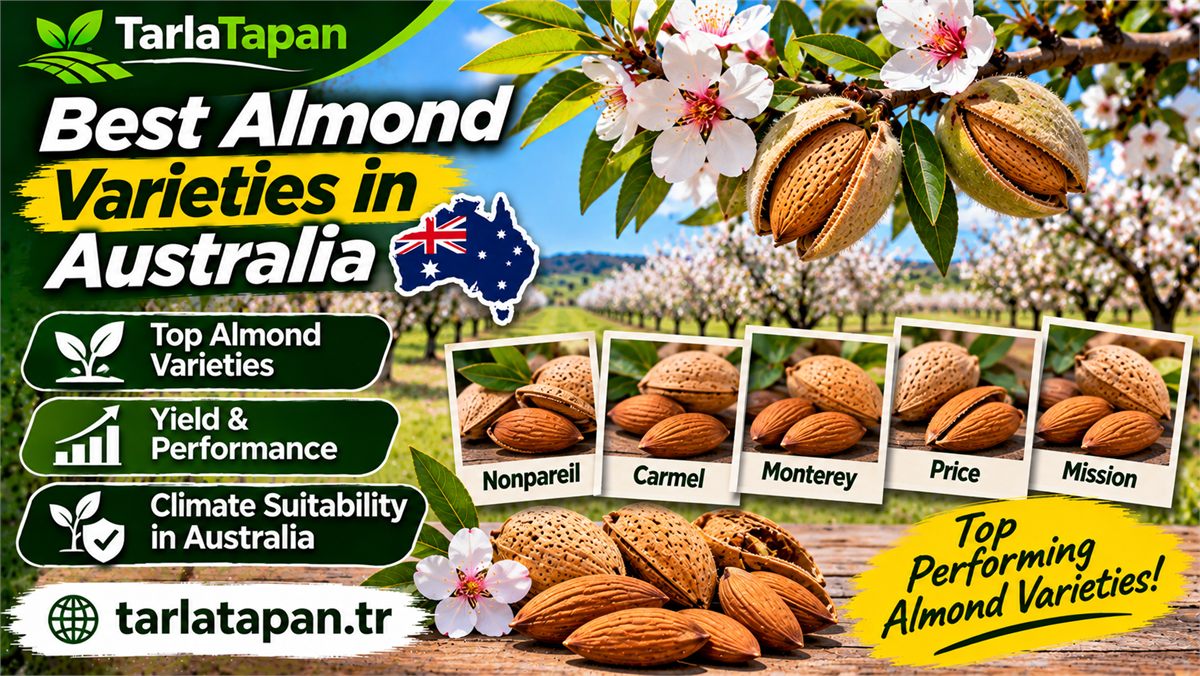
Which Almond Variety Is Best for Australia? The best almond varieties for Australia depend on whether you are growing an orchard or a single garden tree. Commercial growers mainly plant Nonpareil with pollinator varieties such as Carmel and Price. For backyards, self-fertile varieties such as All-in-One, Garden Prince and Shasta are the easiest choice. This guide compares the main options.
Main commercial almond varieties in Australia
Australian almond orchards are dominated by a small group of varieties. Industry sources list Nonpareil, Carmel, Price, Peerless and Ne Plus Ultra as the main ones.
| Variety | Role | Notes |
|---|---|---|
| Nonpareil | Main variety | Thin shell, high-value kernel, needs a pollinator |
| Carmel | Pollinator | Planted in rows beside Nonpareil |
| Price | Pollinator | Flowers at a similar time to Nonpareil |
| Peerless | In-shell market | Hard shell, sold in the shell |
| Ne Plus Ultra | Pollinator / early | Large kernel, early flowering |
Nonpareil cannot set nuts with its own pollen. Growers plant rows of other varieties that flower at the same time so bees can carry pollen between them.
Self-fertile almonds in Australian orchards
Self-fertile almond varieties are growing quickly in Australia. Industry reports say more than 25% of new trees planted in recent years are self-fertile.
Self-fertile trees can set nuts with their own pollen. They still benefit from bees, but they need fewer hives. Australian breeding programs have developed self-fertile varieties partly to reduce the industry's dependence on bees. Every tree in a self-fertile orchard can also be the same variety, which makes harvest simpler.
Best almond varieties for backyards
For a home garden, choose a self-fertile variety so one tree can crop alone.
- All-in-One: the most common backyard almond in Australia. Self-fertile, with a chill need of about 400 hours.
- Garden Prince: a dwarf, self-pollinating tree. It needs about 250 chill hours, so it suits milder areas. Its small size makes netting easy.
- Shasta: a self-pollinating softshell variety that ripens around February.
If you want Nonpareil or another cross-pollinating type, you need a second compatible variety nearby.
Choosing a variety for your climate
Match the variety's chill need to your winter. A South Australian source puts the general almond chill need at around 300 hours below 7°C, but low-chill types need less.
- Cold inland areas: most varieties get enough chill. Choose later-flowering types to reduce frost risk.
- Mild coastal areas: choose a low-chill variety such as Garden Prince.
- Frost-prone sites: early-flowering varieties such as Ne Plus Ultra are more at risk.
Softshell vs hardshell almonds
Softshell varieties such as Nonpareil and Shasta are easy to crack by hand. Birds and insects also get into them more easily. Hardshell varieties such as Peerless protect the kernel better and store well in the shell, but need a nutcracker.
For a backyard, softshell nuts are easier to use. Net the tree to protect them from birds.
For planting and care, read our guide to growing almond trees in Australia. For pollination details, see almond pollination in Australia.
Where to buy almond trees in Australia
Buy grafted trees from a specialist fruit tree nursery or a good local garden centre. Grafted trees of a named variety give reliable nuts and fruit sooner than seedlings. Winter is the main season for bare-root trees, which are usually cheaper than potted ones. Check the label for the variety, rootstock and chill need before you buy.
Which almonds are best in Australia?
In Australian commercial orchards, Nonpareil is the most important almond variety because of its high-quality, easy-to-shell kernels. It needs other varieties planted nearby as pollinators, such as Carmel, Price or Monterey.
For backyard growers, self-fertile varieties are often the best choice, because one tree can set nuts on its own. Ask your local nursery which self-fertile varieties do well in your region and on which rootstock they are grafted.
How many years does it take an almond tree to produce?
A grafted almond tree usually begins to produce a small crop in its third or fourth year after planting. Full production in commercial orchards is reached after about six to eight years.
Seedling trees grown from a nut take longer and may produce bitter or poor-quality nuts. That is why almond trees are almost always sold grafted onto a rootstock.
Almond rootstocks: why they matter
The rootstock affects the tree's size, vigour, drought tolerance and resistance to soil problems. Almond trees in Australia are commonly grafted onto peach, almond or peach-almond hybrid rootstocks.
Peach-almond hybrids are vigorous and cope well with replant problems and alkaline soils. Peach rootstocks suit soils that are slightly wetter, while almond seedling rootstocks tolerate drought. Your nursery can recommend the right one for your soil.
Do you need two almond trees?
Most almond varieties need a second compatible variety nearby for pollination. Self-fertile varieties are the exception and can crop alone.
Even self-fertile almonds often set more nuts with bees present. If space allows, a second tree that flowers at the same time can improve the crop of both.
Choosing an almond variety for your climate
In regions with spring frosts, choose a later-flowering variety so the blossom is less likely to be damaged. In hot, dry inland areas, most commercial varieties perform well with irrigation.
Humid coastal areas are less suited to almonds, because wet weather during flowering and harvest encourages fungal diseases. If you live in a marginal climate, a dwarf self-fertile tree in a sunny, sheltered spot is the safest choice.
More Australian Almond Guides
- Growing Almond Trees in Australia
- Almond Pollination in Australia
- Where Are Almonds Grown in Australia?
- When to Harvest Almonds in Australia
Frequently Asked Questions
What is the most popular almond variety in Australia?
Nonpareil is the main commercial almond variety in Australia. It is planted with pollinator varieties such as Carmel and Price. For backyards, All-in-One is the most popular choice.
Which almond trees are self-pollinating?
Self-pollinating almond varieties include All-in-One, Garden Prince and Shasta. Australian breeding programs have also released self-fertile varieties for orchards. Nonpareil, Carmel and Price are not self-fertile.
What is the best almond tree for a small garden?
Garden Prince is a good choice for a small garden. It is a dwarf, self-pollinating tree that is easy to net against birds. It also needs fewer chill hours than most almonds.
Do almond trees need chill hours?
Yes, almond trees need winter chill to flower well. Many varieties need a few hundred hours below 7°C. Low-chill varieties such as Garden Prince need around 250 hours.
Can you grow almonds from a supermarket nut?
Most supermarket almonds are pasteurised and will not germinate. Even fresh nuts grow into trees that differ from the parent. Buy a grafted tree of a named variety for reliable nuts.
TarlaTapan guides focus on practical, field-tested growing advice. Corrections and suggestions are welcome at info@tarlatapan.tr.