Where Are Almonds Grown in Australia? Regions, Producers and Industry
Where are almonds grown in Australia? Murray Valley regions, the largest producers, where supermarket almonds come from and which country grows the most.
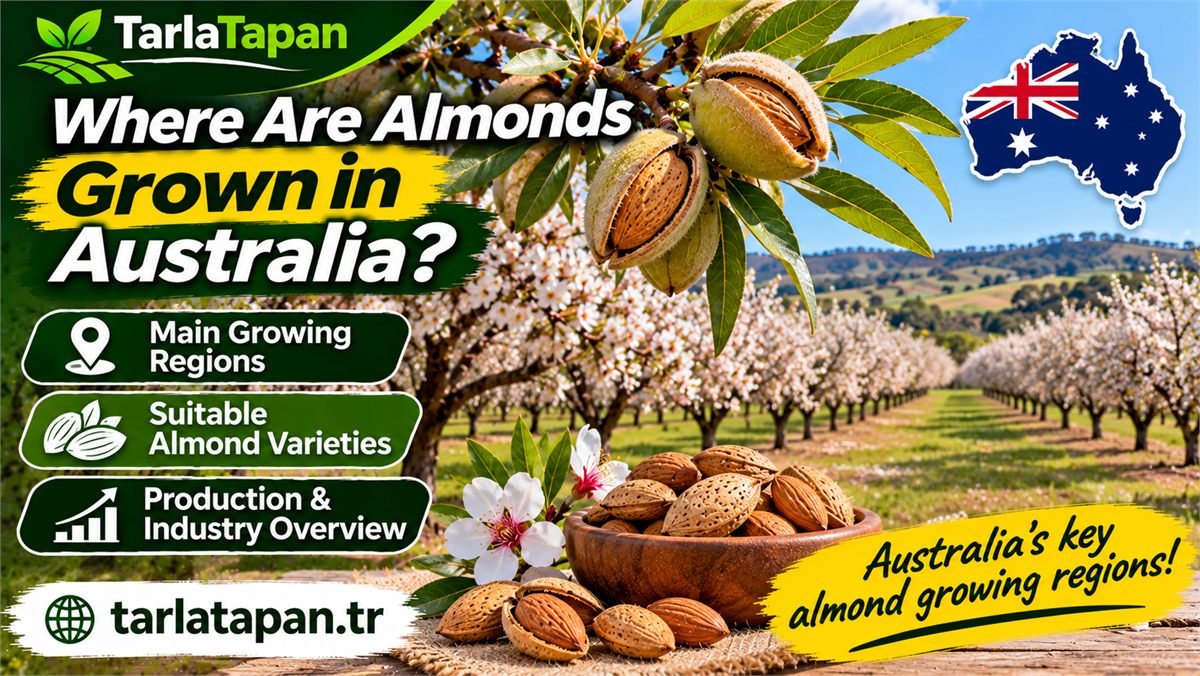
Where Are Almonds Grown in Australia? Where are almonds grown in Australia? Almost all of the crop comes from the Murray Valley. The main regions are Sunraysia in Victoria, the Riverina in New South Wales and the Riverland in South Australia. Newer orchards have spread into Victoria's Goulburn Valley. This guide covers each region, how big the industry is and why these areas suit almonds.
Main almond growing regions in Australia
Australian almonds grow along the Murray River and its tributaries. The growing belt runs east from the Northern Adelaide Plains through the Riverland, Sunraysia and the Riverina. Recent expansion has also reached Shepparton in the Goulburn Valley.
| Region | State | Planted area (recent mapping) |
|---|---|---|
| Sunraysia | Victoria | About 25,690 ha |
| Riverina | New South Wales | About 19,030 ha |
| Riverland | South Australia | About 14,370 ha |
| Goulburn Valley | Victoria | Growing area |
Sunraysia, around Mildura and Robinvale, has the largest area. The Riverina and the Riverland have grown fastest in recent mapping.
How big is the Australian almond industry?
Total almond plantings in Australia grew from about 62,400 hectares in 2023 to about 71,900 hectares in later industry mapping. This makes almonds one of the country's largest horticultural crops.
Australia exports most of its almonds. Industry figures for the 2025–26 season reported sales of about 154,113 tonnes.
Despite the industry's size, many farms are modest. About two thirds of Australian almond properties are 100 hectares or less. Some large corporate orchards cover thousands of hectares.
Why the Murray Valley suits almonds
The Murray Valley has the climate almonds need: cool winters for chill, a dry spring for flowering and long, hot, dry summers for nut fill. Low summer rain also means less disease and a drier harvest.
Water is the other reason. Almonds need a lot of irrigation, and the Murray–Darling system supplies it. Most orchards use drip irrigation. Read more in our guide to how much water an almond tree needs.
Almonds outside the main regions
Small orchards and backyard trees grow in other parts of southern Australia. Adelaide and the Northern Adelaide Plains have a long history of almond growing. Western Australia has small plantings, and backyard trees do well in Perth and inland areas.
Humid coastal areas and the tropics are a poor match. Summer rain raises disease risk, and many areas lack winter chill.
Main varieties grown in these regions
The main commercial varieties are Nonpareil, Carmel, Price, Peerless and Ne Plus Ultra. Self-fertile varieties now make up more than a quarter of new plantings. See our guide to the best almond varieties for Australia.
Almond calendar in the Murray Valley
- June–July: trees are dormant; pruning and orchard hygiene.
- August: bloom and bee pollination.
- September–November: nut growth and kernel fill begins.
- December–January: hull split.
- February–April: harvest.
For more, read when to harvest almonds in Australia and our main guide to growing almond trees in Australia.
Challenges for Australian almond regions
The main challenges are water, weather and bees. Water allocations in the Murray–Darling system change with rainfall, and almonds need a lot of it. Rain at harvest can halt picking and damage nuts, as happened in parts of the Riverland and Sunraysia in recent seasons. Bee supply matters too, because most orchards rely on hundreds of thousands of hives each August. The rise of self-fertile varieties is partly a response to that risk.
Who are Australia's largest almond producers?
Australia's almond industry includes a few very large growers and many family farms. Among the largest is the listed company Select Harvests, alongside global agribusiness companies and investment-owned orchards.
Large companies operate thousands of hectares, processing plants and their own brands. Family farms usually sell their crop through processors and marketers. Ownership changes regularly, so the industry body, the Almond Board of Australia, is the best source for current information.
Where do supermarket almonds come from?
Almonds labelled Australian grown in supermarkets mostly come from the Murray Valley orchards of South Australia, Victoria and New South Wales. Some packs may also contain imported almonds, especially processed or mixed products.
Check the country of origin label on the pack. Australian labelling rules show how much of the product is grown in Australia. Fresh-season Australian almonds are harvested from about February to April.
Which country grows the most almonds?
The United States, mainly California, grows by far the largest share of the world's almonds. Australia is one of the leading producers and exporters outside the United States.
Spain, Turkey, Iran and Morocco are other notable producers. Because Australia harvests in the opposite season to California, its almonds reach export markets at a different time of year, which is an advantage for Australian exporters.
Why is almond growing controversial in Australia?
Almond growing is debated in Australia because of its high water use in the Murray-Darling Basin. Critics argue that permanent crops lock in water demand, while growers point to efficient irrigation and high value per megalitre.
Unlike annual crops, almond trees cannot be left unwatered in a dry year without long-term damage. This makes water policy and water prices a central topic for the industry.
How has the almond industry grown in Australia?
Almond plantings in Australia expanded strongly over the past two decades, especially along the Murray River in Victoria and South Australia. Large new orchards were planted on irrigated land, often by corporate investors.
This growth made almonds one of Australia's most valuable horticultural exports. It also increased demand for water, bees and processing capacity, which shapes the industry's challenges today.
More Australian Almond Guides
- Growing Almond Trees in Australia
- When to Harvest Almonds in Australia
- How Much Water Does an Almond Tree Need
- Best Almond Varieties for Australia
Frequently Asked Questions
Which state grows the most almonds in Australia?
Victoria grows the most almonds, mainly in the Sunraysia region around Mildura and Robinvale. New South Wales (Riverina) and South Australia (Riverland) follow. All three regions sit along the Murray Valley.
How many hectares of almonds are there in Australia?
Recent industry mapping put Australian almond plantings at about 71,900 hectares. This was up from about 62,400 hectares in 2023. Most new plantings are in the Riverina, Riverland and Goulburn Valley.
Why are almonds grown along the Murray River?
The Murray Valley has cool winters, dry springs and hot, dry summers that suit almonds. The river system also supplies the irrigation water almonds need. Low summer rain reduces disease and harvest damage.
Does Australia export almonds?
Yes, Australia exports most of its almond crop. The 2025–26 season recorded sales of about 154,113 tonnes.
Can almonds grow in Western Australia?
Yes, almonds can grow in Western Australia, though commercial plantings there are small. Backyard trees grow well around Perth and in inland areas with cool winters and dry summers.
TarlaTapan guides focus on practical, field-tested growing advice. Corrections and suggestions are welcome at info@tarlatapan.tr.