Can I Keep Chickens in My Backyard in Australia? Council Rules and Limits
Can I keep chickens in my backyard in Australia? Council limits, roosters, coop distances, registration, the most common chicken killers and old hens.
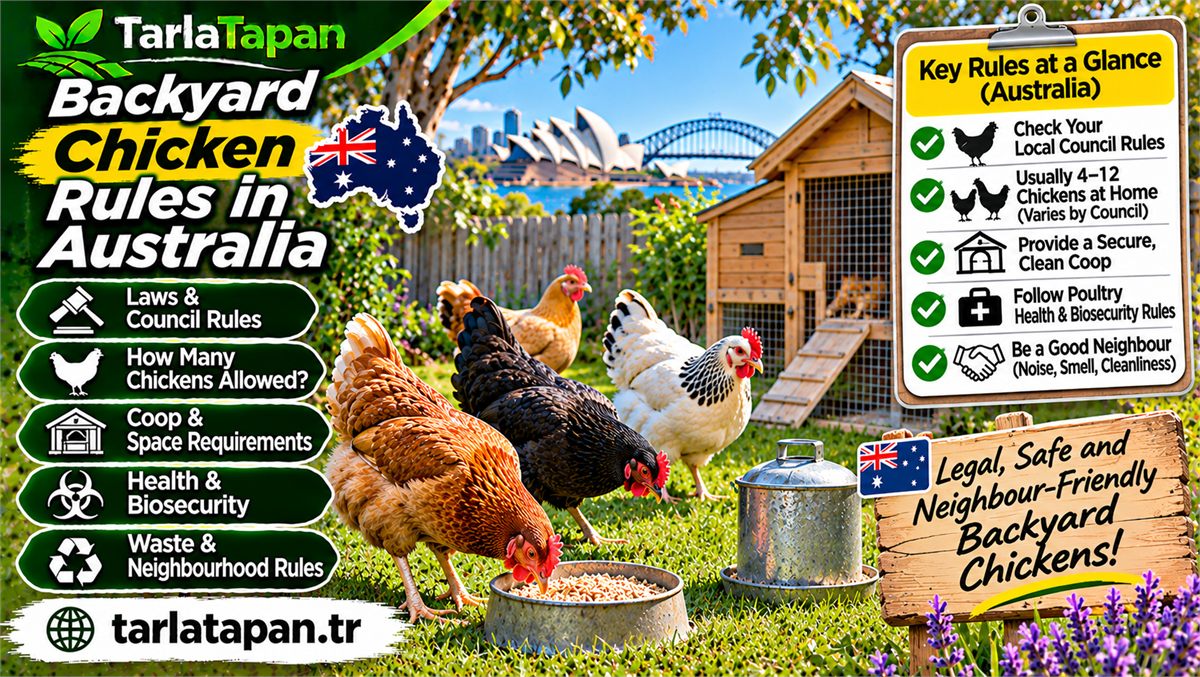
Can I Keep Chickens in My Backyard in Australia? Backyard chicken rules in Australia are set by local councils, not by a single national law. Each council decides how many hens you can keep, whether roosters are allowed and how far the coop must be from neighbours. Most suburban councils allow a small flock of hens, but many ban roosters. This guide explains the common rules and gives real council examples.
Who sets the rules for backyard chickens?
Local councils set the rules for keeping chickens on residential land. There is no statewide limit in New South Wales, Victoria or Queensland for a few backyard hens. Rules usually sit in a council's local laws or animal keeping policy.
State agriculture departments set separate biosecurity rules, mostly for larger flocks and disease outbreaks. Animal welfare laws apply everywhere.
How many chickens can you keep?
Limits vary, but many suburban councils allow somewhere between about 5 and 10 hens on a standard block. Larger rural-residential blocks often allow more.
| Council | Example rule |
|---|---|
| North Sydney (NSW) | Up to 10 chickens, no roosters |
| City of Yarra (VIC) | Up to 5 chickens; not in flats or units |
| Brisbane (QLD) | Small number on smaller blocks; more on larger blocks with a free self-assessed permit |
| Kempsey (NSW) | Roosters banned in residential areas |
These are examples only. Councils update their rules, so always check your council's current page.
Are roosters allowed?
Many councils ban roosters in residential areas because of crowing noise. Brisbane, North Sydney and Kempsey all restrict roosters on residential land. You do not need a rooster for hens to lay eggs; a rooster is only needed to fertilise eggs for chicks.
On rural properties, roosters are usually allowed, but noise complaints can still lead to action.
Coop location and distance
Councils often set a minimum distance between the coop and boundaries or neighbouring houses. North Sydney, for example, requires the coop to be at least 3 metres from the boundary, with a set floor area. Brisbane sources mention at least 1 metre from dividing fences.
Common conditions include:
- Coop placed in the back yard, not the front.
- Minimum distance from boundaries and neighbours' homes.
- Coop kept clean, with no smell or vermin problems.
- Feed stored so it does not attract rats.
Permits and registration
Most councils do not require a permit for a few hens. Brisbane uses a free, self-assessed livestock permit for some situations. Some councils require approval for larger flocks or bigger coops.
Large flocks may also need registration with the state for biosecurity, especially during bird flu outbreaks. Check your state agriculture department if you keep more than a few birds.
Noise, smell and neighbours
Most complaints about backyard chickens come from noise, smell and rats. Keep neighbours happy by:
- Keeping hens only, no rooster.
- Cleaning the coop weekly and composting manure.
- Using a rat-proof feeder and storing feed in sealed bins.
- Placing the coop away from neighbours' windows.
- Sharing a few eggs over the fence.
Strata and rental properties
If you live in a strata property or rent, you may need extra permission. Strata by-laws often limit animals, and some councils ban chickens in flats and units. Ask your strata committee or landlord before getting birds.
For setting up your flock, read our guide to backyard chickens in Australia and our guide to building a fox-proof chicken coop.
What is the most common killer of backyard chickens?
In most of Australia, foxes are the most common killer of backyard chickens. They can take a whole flock in a single night if the coop is not secure.
Other common threats are dogs, quolls and pythons in some regions, birds of prey for young chicks, extreme heat and diseases. Locking hens in a fully enclosed, fox-proof coop every night is the most effective protection.
Why don't people eat their egg-laying hens?
Most backyard egg-laying hens are not eaten because modern layer breeds carry little meat and older hens are tough. Many owners also keep their hens as pets after they stop laying.
Dual-purpose breeds such as Sussex and Plymouth Rock carry more meat and were traditionally used for both eggs and the table. If you do process birds at home, check local rules on slaughter and waste. Many councils also restrict the number of birds, so retirement planning for old hens is part of keeping chickens.
Do you need to register backyard chickens?
In some states, you need to register with the state agriculture department if you keep more than a certain number of poultry, or any number in some places. Rules change and differ between states.
Registration helps authorities contact owners during disease outbreaks such as bird flu. Check your state's current requirements and your local council's rules before buying birds.
Some states also require a property identification code when you keep poultry. The process is usually free or low cost and done online.
What is the 90/10 rule for chickens?
The 90/10 rule means that about 90 per cent of a chicken's diet should be a complete layer feed and no more than 10 per cent treats, kitchen scraps and garden greens. It keeps hens laying well and prevents nutritional problems.
Layer pellets or crumbles are balanced for protein, calcium and vitamins. Too many treats, bread or scraps dilute this balance, which can lead to fewer eggs, thin shells and overweight hens. Offer treats in the afternoon after hens have eaten their main feed, and never feed anything mouldy, salty or containing avocado.
More Backyard Chicken Guides
- Backyard Chickens in Australia
- Keeping Chickens Cool in Summer
- Fox-Proof Chicken Coop
- Best Chicken Breeds for Australia
Frequently Asked Questions
Do I need council permission to keep chickens?
Many councils allow a few hens without permission, but rules vary. Some, like Brisbane, use a free self-assessed permit for larger numbers. Check your council's website before buying chickens.
Can I keep a rooster in my backyard in Australia?
Usually not in residential areas. Many councils, including Brisbane and North Sydney, ban roosters on residential land because of noise. Rural properties often allow them.
How far does a chicken coop need to be from a fence?
It depends on your council. North Sydney requires at least 3 metres from the boundary, while Brisbane sources mention at least 1 metre from dividing fences. Check your council's rules.
How many chickens can I keep in Sydney?
Each Sydney council sets its own limit. North Sydney allows up to 10 chickens with no roosters. Other councils may allow fewer, so check your local council.
Can you keep chickens in a rental property?
You can keep chickens in a rental only with the landlord's permission and if council rules allow. Strata properties also need committee approval. Get permission in writing first.
TarlaTapan guides focus on practical, field-tested growing advice. Corrections and suggestions are welcome at info@tarlatapan.tr.