Why Is My Walnut Tree Dropping Nuts?
The main causes of walnut nut drop – pollination, codling moth, blight, frost and stress – and how to diagnose them.
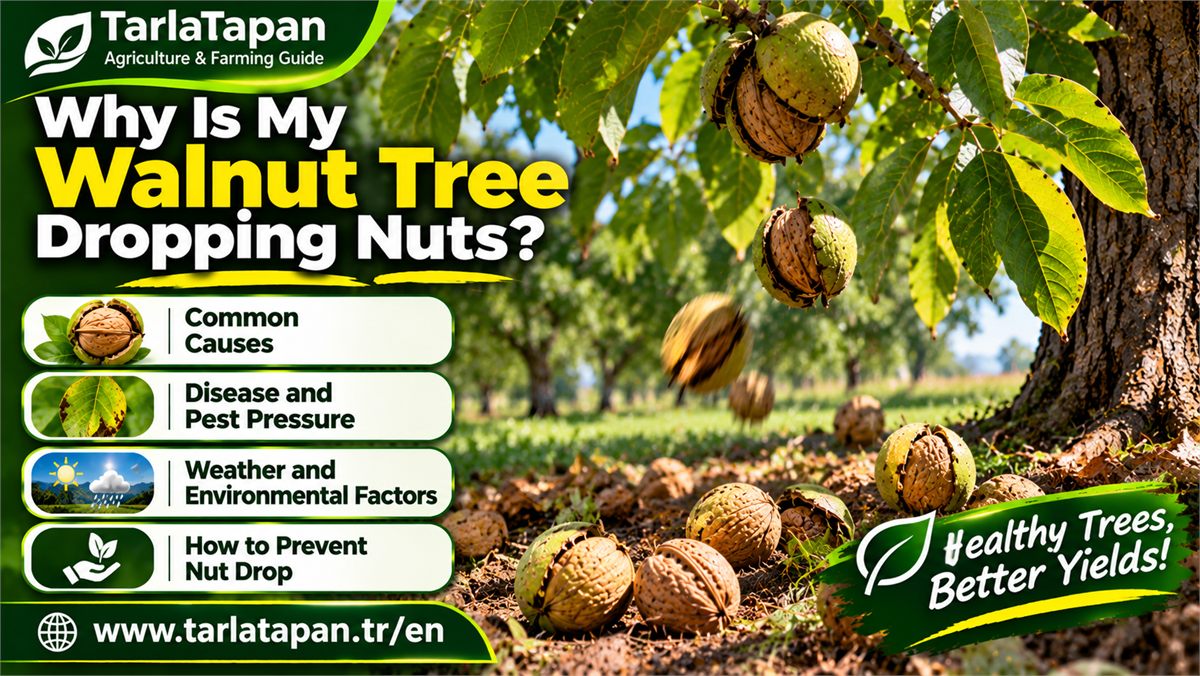
Walnut trees drop nuts early for five main reasons: poor pollination, codling moth, walnut blight, late spring frost, and water or nutrient stress. The quickest way to find the cause is to cut a few fallen nuts in half and look inside. Tunnels and a larva mean codling moth; a brown, rotten kernel with black sunken spots on the husk means walnut blight; tiny nuts with no kernel development, dropping soon after flowering, point to pollination or frost. Some drop is normal – every walnut sheds part of its crop – but heavy drop year after year needs attention.
Normal Drop vs Problem Drop
Every walnut sets more female flowers than it can feed and sheds the extra ones itself. This natural drop happens in the weeks after flowering and the nuts are small. Drop is a problem when:
- the ground under the tree is covered with small nuts every year and few nuts remain at harvest;
- nuts larger than a hazelnut keep falling in early to mid summer;
- fallen nuts show holes, black spots or rot;
- a tree flowers heavily but bears almost nothing.
Poor Pollination
On most walnuts the male catkins and female flowers of the same tree open at different times (dichogamy). If only one variety is planted, or the pollinator's timing does not match, female flowers are not pollinated and the tiny nuts drop.
- Drop comes shortly after flowering, while nuts are very small.
- Cut open, the nut shows no development – healthy tissue but no kernel.
- The same pattern appears on all trees of the same variety.
Fix: plant a compatible second variety, or graft a pollinator branch onto the tree. Rain and cold during flowering can also reduce pollination in some years.
Pistillate flower abortion
Some varieties – Serr is the best-known example – can drop a large share of their female flowers when they receive too much pollen. The flowers fall when they are about pea-sized. Where this is a problem, growers avoid planting heavy pollen sources right next to these varieties.
Codling Moth
First-generation codling moth larvae enter the green husk while nuts are hazelnut-sized, bore through the still-soft shell and feed inside. These nuts drop in early summer.
- A small hole in the husk, darkening around it and frass at the entrance.
- Inside: tunnels, frass and a pinkish-white larva.
- Drop increases once nuts pass hazelnut size.
Untreated orchards lose around 18–22% of the crop. Monitor with pheromone traps and time control to egg hatch (see our guide to codling moth and walnut husk fly).
Walnut Blight
Bacterial walnut blight is most dangerous during flowering and early nut growth; infected young nuts drop in large numbers, and losses can exceed 50% in badly infected orchards.
- Female flowers turn black and dry up.
- Nuts show oily-green spots that turn black and slightly sunken.
- Cut open, the kernel is brown and rotten; sometimes the spot starts at the blossom end and moves inward.
Wet springs make it worse. Improve air flow, keep water off the leaves, disinfect pruning tools and use copper sprays at the right time.
Late Spring Frost
Frost is the most sudden cause of drop. Closed buds tolerate about -3°C (27°F), but open flowers and small green nuts are damaged at about -1°C (30°F).
- A few days after a frost night, the stigmas on female flowers turn brown.
- Frozen small nuts are brown inside and drop within a few weeks.
- If the catkins freeze, no pollen is released and even undamaged female flowers go unpollinated.
Water Stress and Nutrient Shortage
- Drought: a tree short of water in early and mid summer drops part of its crop and cannot fill the rest. Sudden heavy watering after drought can starve roots of oxygen with a similar result.
- Zinc deficiency: zinc helps nut stems hold on. Look for small, narrow leaves bunched in rosettes at shoot tips.
- Overcropping: a very heavy set on a stressed tree is thinned by the tree itself.
Empty or Shrivelled Kernels
Sometimes nuts stay on the tree but are empty, shrivelled or dark when cracked. Common causes are drought during kernel fill, sunburn on hot days above 35°C (95°F), a cool summer that leaves kernels underfilled, walnut husk fly and potassium shortage.
Diagnosis: Cut 15–20 Fallen Nuts
| What you see | Likely cause |
|---|---|
| Tunnels, frass, pinkish-white larva; hole in the husk | Codling moth |
| Black, sunken husk spots; brown, rotten kernel | Walnut blight |
| Brown spots with whitish coating; spotted leaves too | Anthracnose |
| Very small nut, no kernel but healthy tissue; drop soon after flowering | Poor pollination (or pistillate flower abortion) |
| Brown inside, drop a few weeks after a cold night | Late frost |
| Healthy-looking nuts dropping in a dry spell | Water stress |
| Soft black husk with maggots in late summer | Walnut husk fly |
What About Black Walnut?
Black walnuts commonly drop green nuts in late summer and early autumn. Usually this is a mix of natural thinning, drought stress and insects such as husk maggots, and it rarely harms the tree. Simply rake up fallen nuts to reduce pests next year.
Related Walnut Guides
- How to grow walnut trees: complete guide
- Codling moth and husk fly: when to spray
- Walnut tree diseases
- How often to water walnut trees
- Best walnut tree varieties
Frequently Asked Questions
Why is my walnut tree dropping green nuts?
Most often codling moth, walnut blight, drought stress or poor pollination. Cut a few fallen nuts open to see which.
Is it normal for walnut trees to drop nuts?
Yes, some drop after flowering is normal. Heavy drop of larger nuts in early summer is not.
Why does my walnut tree flower but not produce nuts?
Usually a pollination problem – the tree's male and female flowers open at different times and there is no compatible variety nearby – or a late frost during flowering.
Why are my walnuts empty inside?
Drought during kernel fill, sunburn, a cool summer or potassium shortage leave kernels shrivelled or empty even when the shell looks normal.
How do I stop my walnut tree from dropping nuts?
Plant a pollinator, water steadily through summer, control codling moth and walnut blight, and choose a late-leafing variety in frost-prone areas.
TarlaTapan guides focus on practical, field-tested growing advice. Corrections and suggestions are welcome at info@tarlatapan.tr.